
Red Dot vs LPVO for an AR-15: Which Optic Is Best for Your Setup?
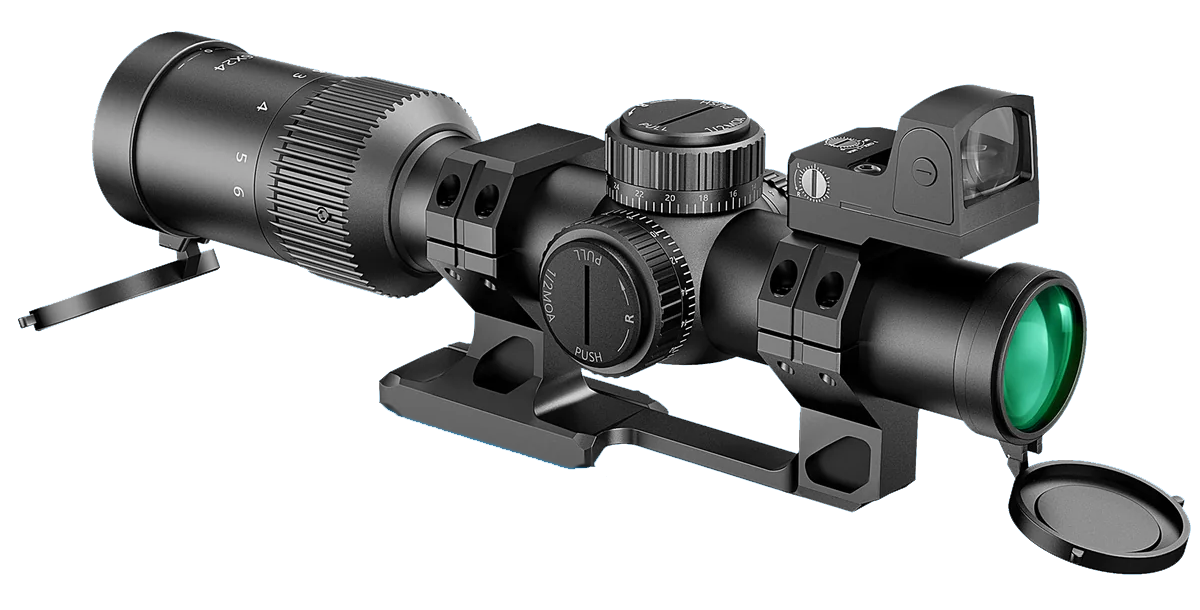
If you are shopping for an AR-15 optic, one of the most common questions is whether a red dot or an LPVO is the better choice. Both are popular for good reason, but they serve different needs depending on how you use your rifle.
For most buyers, the decision comes down to distance, speed, simplicity, and versatility. A red dot is usually the faster and lighter option for close-range shooting, while an LPVO offers more flexibility if you want magnification and better target identification at longer distances.
If your goal is to choose the right optic for your first AR-15 or upgrade your current setup, this guide breaks down the differences in a simple way so you can decide what fits your needs best.
What is a red dot sight?
A red dot sight is a non-magnified optic designed for fast target acquisition. It places a bright aiming point on the target and is commonly used on AR-15 rifles for close-range shooting, home defense, range use, and general-purpose setups.
Red dots are popular because they are lightweight, simple to use, and easy to learn. For many new AR-15 owners, a red dot is the easiest optic to start with because it keeps the rifle fast and uncomplicated.
What is an LPVO?
LPVO stands for Low Power Variable Optic. These scopes usually start at true or near-true 1x and increase to magnification ranges like 1-4x, 1-6x, 1-8x, or even 1-10x.
An LPVO gives the shooter more flexibility than a red dot because it can be used at close range on low power and also provide magnification for medium-range shooting. That is why LPVOs have become extremely popular on AR-15 rifles built for all-around use.
What is the main difference between a red dot and an LPVO?
The main difference is simple: a red dot prioritizes speed and simplicity, while an LPVO prioritizes versatility and magnification.
- Red dot: lighter, faster, simpler, best for close-range speed
- LPVO: more versatile, better for mixed distances, more capable at longer range
If you mostly shoot at short distances and want a lightweight setup, a red dot often makes the most sense. If you want one optic that can cover close-range work and also give you more reach, an LPVO is often the better answer.
Is a red dot better for a beginner AR-15?
For many first-time AR-15 owners, yes. A red dot is often the easiest optic to learn because it is simple, fast, and less complicated than a magnified scope.
If your primary use is range shooting, home defense, or general-purpose shooting inside normal practical distances, a red dot keeps the rifle light and easy to handle. It also usually costs less once you factor in the optic, mount, and overall setup.
Is an LPVO better for an all-purpose AR-15?
For many shooters, yes. If you want one optic that can do a little of everything, an LPVO is one of the most versatile options you can put on an AR-15.
At 1x, an LPVO can still work for close-range shooting. When you turn the magnification up, it becomes much easier to identify targets, refine your aiming point, and make better hits at medium distances. That makes an LPVO a strong choice for shooters who want more than just close-range speed.
Which is faster: red dot or LPVO?
In most cases, a red dot is faster at close range. The sight picture is simple, the optic is lightweight, and the aiming point is easy to pick up quickly.
An LPVO can still be fast on 1x, especially with a bright illuminated reticle, but it is generally a little heavier and a little less straightforward than a dedicated red dot. For pure speed at short range, red dots usually have the advantage.
Which is better at distance?
An LPVO is usually the better choice at distance because magnification helps you see the target more clearly and make more precise shots. Even a 1-6x LPVO gives a shooter a major advantage once distances begin to stretch beyond typical close-range use.
A red dot can still be effective at distance in trained hands, but it does not offer the same target detail or precision benefit that magnification provides.
Is a red dot lighter than an LPVO?
Usually, yes. One of the biggest benefits of a red dot is that it keeps the rifle lighter and more streamlined.
An LPVO generally adds more size and weight to the rifle, especially once you add a quality mount. If keeping your AR-15 lightweight matters most, a red dot usually wins.
What is better for home defense: red dot or LPVO?
For a home-defense-focused AR-15, a red dot is often the more practical option. It is fast, simple, and optimized for close-range use.
That said, some shooters still prefer an LPVO on a general-purpose rifle that may also be used for range work or outdoor use. The right answer depends on whether your rifle is dedicated to close-range defensive use or meant to cover a wider range of applications.
What is better for range use and training?
Both can work well, but they offer different advantages. A red dot is excellent for fast drills, simple practice, and close-range target work. An LPVO is often better if you want to train across a wider range of distances or learn to use magnification effectively on the AR-15 platform.
If your range sessions mostly stay close and practical, a red dot may be all you need. If you want to shoot at varying distances and get more versatility from one setup, an LPVO is often worth it.
Should you choose a red dot or LPVO for a 16-inch AR-15?
A 16-inch AR-15 works well with either optic, which is one reason this question comes up so often.
If the rifle is meant to stay light, fast, and simple, a red dot is a strong choice. If the rifle is intended to be a more flexible all-around setup, an LPVO usually makes more sense because it allows the rifle to do more across different distances.
What are the downsides of a red dot?
- No built-in magnification
- Less target detail at longer range
- Can be less precise for distance shooting
A red dot is excellent for speed and simplicity, but it gives up the magnification advantage that many shooters want for a more versatile rifle setup.
What are the downsides of an LPVO?
- Heavier than a red dot
- Bulkier setup
- Usually costs more overall
- Can be slower for some shooters at very close range
An LPVO offers more capability, but it also adds weight, complexity, and cost compared to a simple red dot setup.
Which optic should you choose first?
If you want the simplest recommendation, here is the easiest way to decide:
- Choose a red dot if you want speed, simplicity, lighter weight, and mostly close-range use
- Choose an LPVO if you want one optic that can handle close range and also give you useful magnification at distance
For many first-time buyers, a red dot is the easiest starting point. For buyers building a do-it-all AR-15, an LPVO is often the better long-term choice.
Final thoughts: red dot vs LPVO for an AR-15
There is no single optic that is right for every AR-15 owner. The best choice depends on how you actually plan to use the rifle.
If you want a lightweight, fast, and beginner-friendly setup, a red dot is hard to beat. If you want more versatility and expect to shoot at mixed distances, an LPVO is often the stronger all-around option.
The best optic is the one that matches your real use, not just what sounds good on paper. Choosing based on your shooting style, typical distance, and rifle setup will usually lead to the best result.
FAQ Section
Is a red dot or LPVO better for an AR-15?
A red dot is usually better for close-range speed and simplicity, while an LPVO is better for shooters who want magnification and more versatility at different distances.
Is an LPVO good for beginners?
Yes, especially if the shooter wants one optic that can handle both close-range and medium-range use. However, a red dot is often the easier option for a true beginner.
Is a red dot enough for a 16-inch AR-15?
Yes. For many shooters, a red dot is more than enough for practical use, range training, and close-range shooting on a 16-inch AR-15.
What magnification is best on an LPVO for an AR-15?
Common LPVO ranges include 1-4x, 1-6x, and 1-8x. For many AR-15 owners, 1-6x is one of the most popular all-around choices.
Can a red dot be used at distance?
Yes, but it is generally less effective than an LPVO for target identification and precision at longer distances because it does not provide magnification.
Explore Popular Articles
How to Choose the Right AR-15 Magazine: 10-Round, 20-Round, 30-Round, Polymer, or Steel?
If you are shopping for AR-15 magazines, one of the first things you will notice is how many options...
Best AR-15 Accessories for New Owners: What to Buy First and What Can Wait
If you just bought your first AR-15, it is easy to get overwhelmed by the number of accessories on t...
AR-15 Upper vs Lower: What’s the Difference and Which Parts Do You Need?
If you are shopping for AR-15 parts, one of the most common questions is the difference between the...
AR-15 Buying Guide: What to Know Before You Buy Your First AR-15
If you are researching your first AR-15, the amount of information online can feel overwhelming fast...