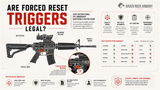
Are Forced Reset Triggers Legal? State Restrictions, FRT Ownership Questions & Buyer Guide
Raven Rock Armory Articles
Are Forced Reset Triggers Legal? State Restrictions, Ownership Questions, and What Rifle Owners Should Know
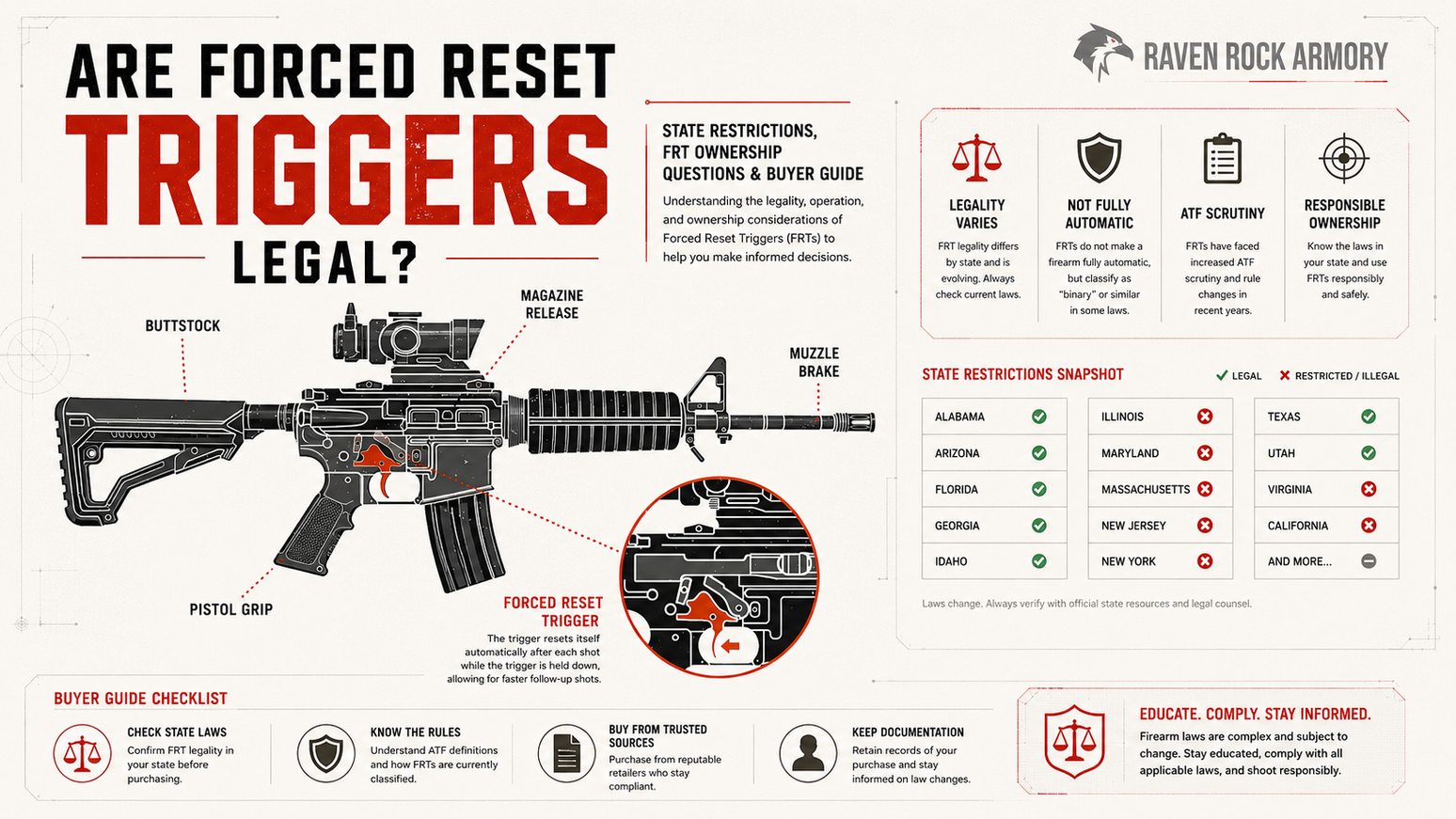
Forced reset triggers are one of the most searched firearm topics for AR-platform owners. The biggest questions are usually simple: Are forced reset triggers legal, what states ban forced reset triggers, and can you own an FRT in your state?
The answer depends on current federal policy, current court rulings, and the state and local law where you live, buy, possess, install, transport, or use the product. This guide is designed to help Raven Rock Armory readers understand the basic legal and practical issues before moving forward with any specialized fire control component.
Are Forced Reset Triggers Legal?
At the federal level, the legal picture around forced reset triggers has changed significantly from where it stood during earlier ATF enforcement actions. That shift is one reason so many rifle owners are searching for updated answers.
However, a change in federal treatment does not mean forced reset triggers are legal everywhere. A trigger that may not be treated the same way under current federal policy can still be restricted or prohibited under state or local law. That is why buyers should treat the legality question as both a federal issue and a state-law issue.
What States Ban Forced Reset Triggers?
There is no safe one-line answer for every reader because state firearm law can change, and local restrictions can add another layer beyond state law. That said, rifle owners should understand that some states have clearly taken the position that forced reset triggers or trigger activating devices are prohibited under state law.
As a practical matter, if you are asking what states ban forced reset triggers, you should not rely on an old list from a forum or social media post. You should verify the current law in your specific jurisdiction before ordering or possessing one.
States That Require Immediate Extra Review
Based on current public litigation records and recent attorney general statements, buyers should use extra caution and verify current law if they are in California, Colorado, Delaware, the District of Columbia, Hawaii, Illinois, Maryland, Massachusetts, Michigan, Minnesota, Nevada, New Jersey, Oregon, Rhode Island, or Washington.
Can You Own an FRT in Your State?
The answer depends on where you live and whether your state or local jurisdiction restricts forced reset triggers, trigger activators, or similar devices. Even if a buyer sees a product discussed nationally, that does not make it lawful to possess in every state.
If you are searching for “can you own an FRT in Texas,” “can you own an FRT in California,” or “can you own an FRT in New Jersey,” the only responsible answer is to verify current law for that exact state and locality before purchasing, installing, or transporting the item.
Questions to Ask Before Buying or Installing an FRT
- Is this product lawful under current federal law?
- Is this product lawful in my state, county, and city?
- Is this exact trigger compatible with my specific firearm and parts combination?
- Does the manufacturer provide current support and fitment information?
- Should installation and function review be handled by a qualified gunsmith?
- Do I understand the legal risk of possession, transport, and use where I live?
Why Rifle Compatibility Still Matters
Any specialized fire control component places more importance on platform compatibility, installation quality, inspection, and lawful function testing. A mismatch between the trigger system and the host rifle can lead to unreliable cycling, unsafe function, or a setup that does not operate the way the owner expects.
That is why responsible owners should focus first on legality, then on exact compatibility, and then on professional installation or inspection when needed. A specialized trigger is not a part to install casually based on guesswork.
What About Federal Enforcement and Recent Changes?
The reason these questions are so common is that the federal picture has changed over time. Recent federal litigation, later federal notices, and a Department of Justice settlement changed the practical landscape for some well-known FRT products.
Even so, state law still matters, and buyers should not assume that a federal change automatically makes ownership lawful in every jurisdiction. The safest approach is always to verify both federal and state law before making any decision.
Best Practices for Buyers and Owners
Verify Current Law
Use current official state sources, current enforcement guidance, and current counsel when needed.
Verify Product Compatibility
Confirm that the exact product is intended for the exact rifle and parts configuration involved.
Use Qualified Help
If there is uncertainty, use a qualified gunsmith for installation, review, and safety inspection.
Avoid Outdated Advice
Do not rely on old forum posts, social media clips, or recycled legal summaries without checking current law.
Important Note for Raven Rock Armory Readers
If you are researching forced reset triggers, the most responsible path is simple: verify the law where you live, verify the exact product, verify the host platform, and do not proceed unless the setup can be possessed, installed, and used safely and lawfully.
Final Thoughts
Searches like “are forced reset triggers legal,” “what states ban forced reset triggers,” and “can you own an FRT in my state” all point to the same reality: this is an area where firearm law, product compatibility, and safety overlap. Because the legal picture can change, the right answer is always the current answer, not the answer that was true last year or in another state.
Raven Rock Armory encourages every customer to verify current law and exact product compatibility before purchasing, installing, possessing, transporting, or using any specialized fire control component.
Explore Popular Articles
Top 10 AR-15 Manufacturers - Raven Rock Armory
AR15 Carbine Buffer Assembly