AR15 Carbine Buffer Assembly

AR15 Carbine Buffer Assembly
Raven Rock Armory Guide

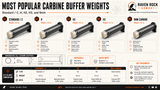
AR-15 Carbine Buffer Weights Explained

Carbine buffer weight plays an important role in how an AR-platform rifle cycles, recoils, ejects, and locks back. Lighter buffers generally allow faster cycling, while heavier buffers help slow the action down and can create a smoother, more controlled recoil impulse when matched to the right setup.

Lighter Buffer: Often used when a rifle needs easier cycling or is running softer ammunition.
Heavier Buffer: Often used to calm down faster cycling, sharper recoil, or over-gassed setups.

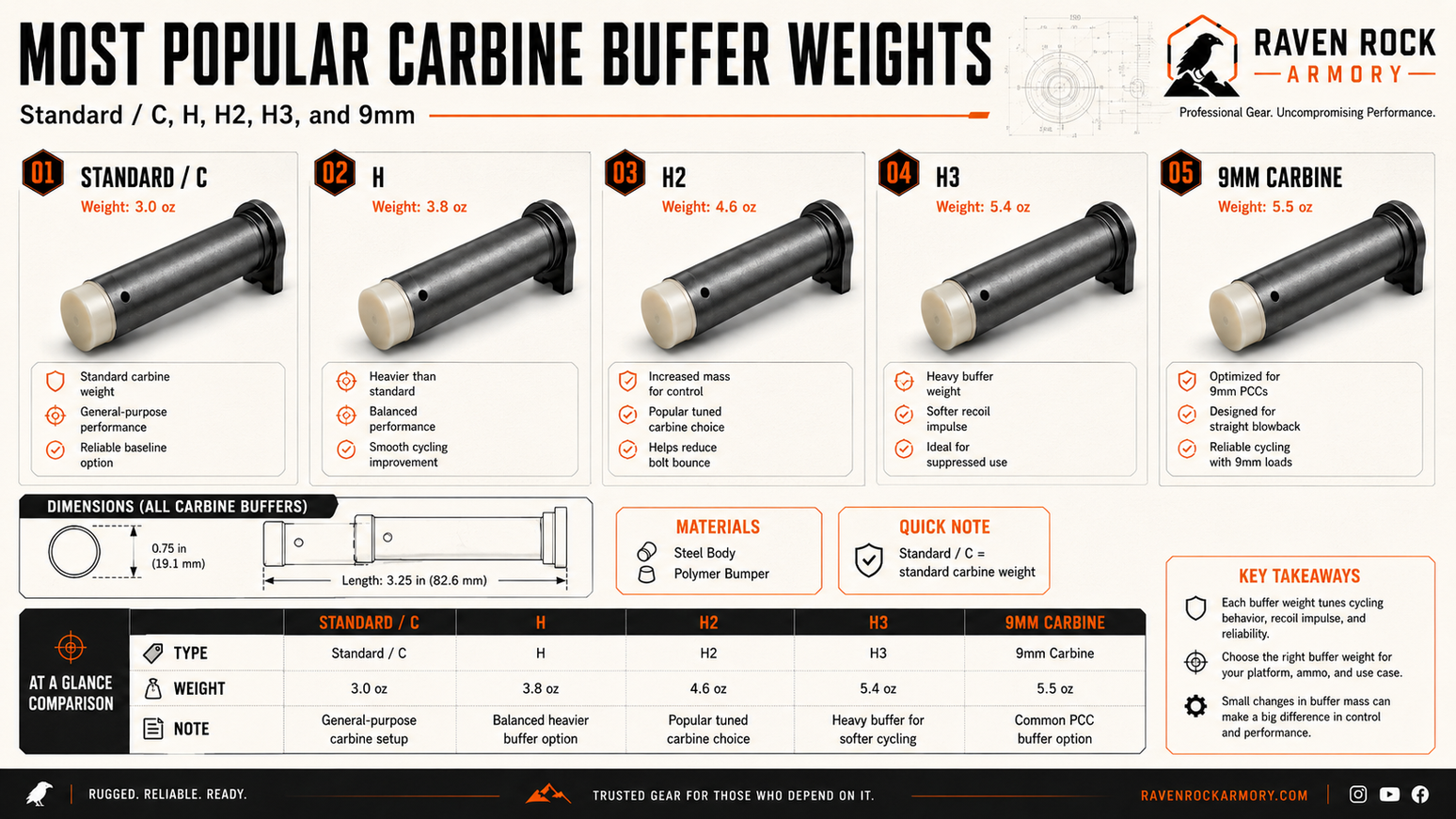
Carbine

Approx. 3.0 oz

A common starting point for standard AR-15 carbine builds and general-purpose rifles.

  • Baseline carbine setup
  • Allows faster bolt movement
  • Good starting point for many unsuppressed rifles

H Buffer

Approx. 3.8 oz

A popular step up from a standard carbine buffer for shooters who want smoother operation.

  • Good general upgrade
  • Helps reduce sharper cycling
  • Common for many 14.5-inch to 16-inch carbines

H2 Buffer

Approx. 4.6 oz

A common tuning choice for rifles that cycle faster than desired or need more control.

  • Helps slow carrier movement
  • Popular for tuned carbines
  • Often useful with shorter or suppressed setups

H3 Buffer

Approx. 5.4 oz

A heavier option for rifles that clearly benefit from more mass in the recoil system.

  • Helps slow faster-running systems
  • Can reduce bolt speed
  • Best for setups that need more control

How to Choose

  • Start with your setup: barrel length, gas system, ammunition, and suppressor use all matter.
  • If the rifle feels sharp or overactive: a heavier buffer may help smooth cycling.
  • If the rifle struggles to cycle: too much buffer weight may create reliability issues.
  • For many standard carbines: Carbine or H buffer weights are common starting points.
  • For faster-running builds: H2 or H3 may be useful when properly matched to the rifle.

Why It Matters

  • Smoother recoil impulse
  • More controlled bolt speed
  • Better ejection consistency
  • Improved lock-back reliability when properly tuned
  • Better match between rifle, ammo, and intended use
Note: Buffer weights can vary slightly by manufacturer. The best choice depends on the complete rifle setup, including gas system, barrel length, ammunition, spring, and whether a suppressor is used.