Battle Arms Development AR15 Carbine Buffer Assembly
Raven Rock Armory Articles
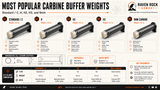
AR Carbine Buffer Weights Explained
Carbine buffer weight plays a major role in how an AR-platform rifle or PCC cycles, recoils, feeds, ejects, and locks back. While buffers are small internal parts, the correct weight can help smooth out the recoil system and improve overall firearm performance.
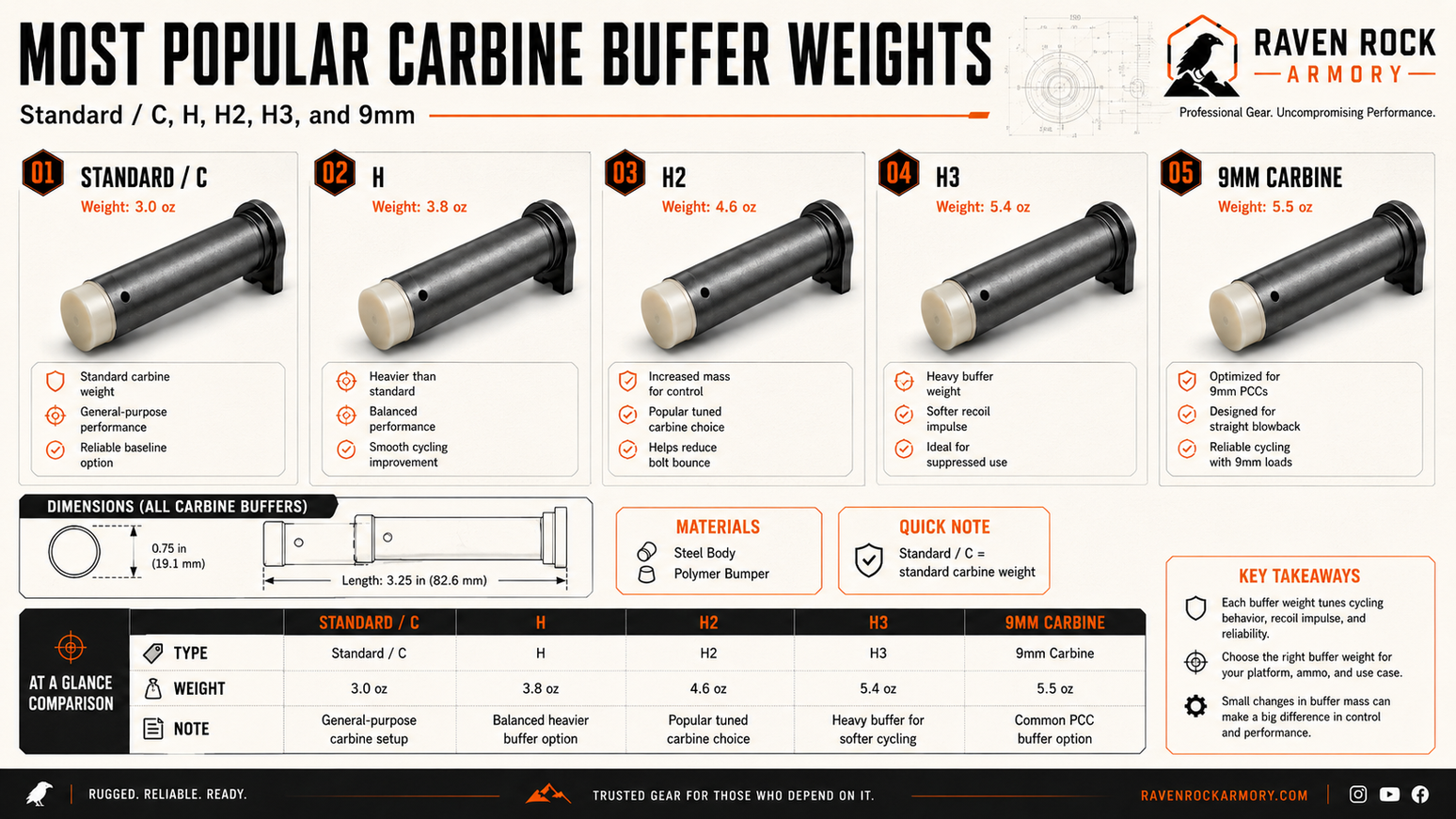
If you are comparing Standard / C, H, H2, H3, and 9mm PCC buffers, the goal is not simply to run the heaviest option. The real goal is to match the buffer to the platform, caliber, operating system, ammunition, and intended use.
What a Carbine Buffer Does
In a carbine-length recoil system, the buffer works with the action spring to control rearward and forward bolt carrier movement during firing. Buffer weight affects how quickly the action opens, how hard the carrier moves to the rear, and how smoothly it returns into battery.
A lighter buffer can allow faster cycling. A heavier buffer can slow the system down and make the recoil impulse feel more controlled. The right balance can improve feeding, reduce bolt bounce, soften felt recoil, and help the firearm run more consistently.
Why Buffer Weight Matters
Changing buffer weight can influence several parts of firearm performance. In many rifles, the correct buffer can help the gun feel smoother and run with better consistency. In other setups, going too light or too heavy can create an imbalance that works against reliability.
Lighter Buffers
- Can allow faster cycling
- May feel sharper in some rifles
- Often used as a baseline starting point
- May work well in standard unsuppressed builds
Heavier Buffers
- Can slow carrier movement
- May soften recoil impulse
- Can reduce bolt bounce in some setups
- Often help control faster-running systems
Areas Commonly Affected
- Recoil impulse
- Bolt speed
- Feeding consistency
- Ejection pattern
- Lock-back reliability
- Suppressed performance
Standard / C Buffer
The Standard / C buffer is the baseline carbine buffer weight and is commonly used in general-purpose AR15 builds. It is often a good starting point for rifles running standard 5.56 NATO or .223 Remington ammunition in conventional unsuppressed setups.
If a rifle already cycles smoothly, feeds reliably, and feels balanced, a Standard / C buffer may be all that is needed. It provides a practical baseline for shooters who want a traditional carbine recoil setup.
H Buffer
The H buffer adds weight over the Standard / C buffer and is a common next step when a rifle feels slightly overactive or sharper than desired. It is often chosen by shooters who want smoother operation without making a major jump in buffer mass.
For many general-purpose carbines, the H buffer can provide a good middle ground. It can help reduce bolt speed compared to a lighter buffer while still maintaining broad usability in common AR15 setups.
H2 Buffer
The H2 buffer is one of the most popular tuning choices because it often offers a strong balance of reliability and smoothness. Shooters commonly look at H2 when they want a more controlled recoil pulse, slower carrier movement, and a more refined cycling feel.
In many practical builds, the H2 buffer is a strong option when moving beyond the baseline carbine setup. It is frequently chosen for tuned carbines and for rifles where the shooter wants additional control without going all the way into the heaviest common AR15 carbine buffer range.
H3 Buffer
The H3 buffer is a heavier carbine option used when more mass is needed to help slow down a faster-running system. It is often considered for rifles that feel especially energetic or for setups where the shooter wants a softer, more controlled recoil impulse.
Heavier is not automatically better. If the rifle does not have enough energy to run the system consistently, too much buffer weight can cause problems. The H3 buffer makes the most sense when the firearm clearly benefits from additional control and slowing of the recoil system.
9mm PCC Buffer
A dedicated 9mm PCC buffer is a different category from standard AR15 carbine buffers. Many AR9 and 9mm PCC platforms use straight blowback rather than a gas-operated system, and that changes how the recoil system has to manage movement.
Because blowback guns rely heavily on mass and spring resistance, a dedicated 9mm PCC buffer helps control bolt movement, reduce harsh cycling, and support better function in pistol-caliber carbines. It is not simply another step above H3. It is intended for a different type of platform.
Which Buffer Should You Choose?
There is no universal best buffer for every rifle. The correct choice depends on the firearm's caliber, gas system, barrel length, ammunition, suppressor use, operating system, and how the gun actually behaves during live fire.
Standard / C
Good baseline for many standard AR15 setups.
H
Useful when a rifle feels slightly sharper or faster than desired.
H2
A very popular tuning choice for smoother and more controlled cycling.
H3
For setups that clearly benefit from more recoil-system mass.
9mm PCC
The right direction for most blowback-operated AR9 and PCC platforms.
Buffer Weight and FRT Considerations
Buffer weight becomes even more important in rifles where timing is more sensitive. A recoil system that is too light can allow the action to cycle more aggressively than intended. A recoil system that is too heavy can create reliability issues if the firearm does not have enough energy to run consistently.
In rifles using forced reset trigger related components, the priority should always be safe, lawful, and reliable operation. A properly matched buffer may help support smoother cycling, but it is not a shortcut for correct setup, legal compliance, or proper function testing.
Important Note: Always verify current federal, state, and local law before installing or using specialized fire control components. Parts compatibility, lawful possession, and safe testing matter more than simply chasing speed.
Shop Buffer Assemblies at Raven Rock Armory
If you are upgrading a rifle or tuning a PCC build, Raven Rock Armory offers the most popular Battle Arms Development carbine buffer options in one place.