
Raven Rock Armory
Short-Barreled Rifles (SBRs) & NFA Rifle Platforms
Shop factory short-barreled rifles and eligible NFA rifle platforms at Raven Rock Armory. Compare SBRs by manufacturer, caliber, barrel length, overall dimensions, operating system, stock configuration, sights, optics compatibility, magazine system, finish, weight, and exact factory specifications while following all applicable federal, state, and local transfer requirements.
Learn more about SBR classifications, platforms & NFA transfer requirements
A short-barreled rifle, commonly abbreviated SBR, is a firearm that falls within the applicable federal National Firearms Act definition based on its configuration and dimensions. Factory SBRs are offered across several rifle platforms and calibers, but their purchase and transfer require additional federal procedures beyond a conventional rifle transaction.
Short-Barreled Rifles
SBR classification depends on the complete firearm and current federal definitions, not simply on appearance or marketing terms. Barrel length, stock configuration, overall configuration, receiver, and other characteristics may be relevant to legal classification.
Factory SBRs
Factory SBRs are produced by the manufacturer in a regulated short-barreled rifle configuration. They enter the commercial distribution and transfer system as NFA-regulated firearms.
Choosing an SBR
- Platform: Compare AR-style, AK-style, pistol-caliber, and other manufacturer-specific rifle platforms.
- Caliber: Verify chambering, magazine compatibility, ammunition specifications, and intended sporting application.
- Dimensions: Review manufacturer-listed barrel length, overall length, stock configuration, and weight.
- Optics & Sights: Compare factory iron sights, rail systems, optic mounting provisions, and included equipment.
- NFA Requirements: Confirm current federal, state, and local eligibility and transfer requirements before ordering.
AR-Style SBRs
AR-pattern SBRs are available from numerous manufacturers and may vary by caliber, barrel length, gas system, handguard, receiver, trigger, stock, sights, muzzle device, and factory accessories.
AK-Style SBRs
AK-pattern SBRs may use stamped or milled receivers, different calibers, folding or fixed stocks, traditional or modern furniture, and manufacturer-specific optic mounting systems.
Pistol-Caliber SBRs
Some factory SBRs are chambered in pistol cartridges and use manufacturer-specific magazines, operating systems, stocks, and sighting arrangements.
5.56 NATO SBRs
5.56 NATO is widely represented among factory short-barreled AR-style rifles. Chamber markings, barrel specifications, twist rate, gas system, and ammunition compatibility should be verified for the exact model.
.300 Blackout SBRs
.300 AAC Blackout is available in selected factory SBR platforms. Exact barrel length, operating system, magazine, ammunition compatibility, and muzzle configuration vary by manufacturer.
7.62x39 SBRs
Selected AK-style and other compact rifle platforms are chambered in 7.62x39. Magazine type, receiver dimensions, barrel specification, and operating components vary by firearm.
9mm SBRs
Pistol-caliber short-barreled rifles chambered in 9mm are available in a variety of dedicated and derivative platforms. Magazine compatibility and operating system are model-specific.
Other SBR Chamberings
Factory SBRs may be offered in additional rimfire and centerfire cartridges. Always use ammunition specifically approved for the firearm's exact chambering.
Barrel Length
Manufacturer-listed barrel length is a key specification when comparing SBRs. Different platforms may use substantially different barrel lengths depending on chambering and factory configuration.
Overall Length
Overall length can depend on receiver design, barrel, stock, muzzle device, folding mechanism, and measurement requirements. Buyers should rely on current manufacturer specifications and applicable legal definitions.
Gas-Operated SBRs
Many rifle-caliber SBRs use a manufacturer-designed gas-operated system. Gas-system configuration varies by platform and barrel.
Piston-Operated SBRs
Certain short-barreled rifle platforms use piston-driven operating systems. Parts and maintenance procedures may differ significantly from conventional direct-gas systems.
Blowback & Delayed Systems
Some pistol-caliber and manufacturer-specific SBR platforms use blowback, delayed, or other operating systems. Exact design should be confirmed from manufacturer documentation.
Stocks
Factory SBRs may use fixed, adjustable, folding, or proprietary stocks depending on platform and model.
Adjustable Stocks
Adjustable stocks can provide multiple manufacturer-defined length-of-pull positions and may affect the firearm's overall dimensions.
Folding Stocks
Folding stocks are available on selected factory SBR platforms. Hinge design, locking system, folding direction, and dimensions vary.
Fixed Stocks
Some factory short-barreled rifles use fixed stocks selected for the firearm's intended configuration and receiver design.
Handguards
Modern SBRs may use aluminum, polymer, M-LOK, Picatinny, or manufacturer-specific handguards. Length and accessory interfaces vary with barrel and platform.
M-LOK Handguards
M-LOK-equipped SBRs provide compatible accessory mounting positions where the handguard design permits.
Picatinny Rails
Picatinny rails are commonly used for compatible optics, sights, lights, and other lawful sporting accessories.
Optics-Ready SBRs
Many modern SBRs include flat-top receivers, integrated rails, or other factory optic mounting provisions.
Red-Dot Sights
Red-dot sights are commonly paired with compact rifle platforms equipped with a compatible rail or mounting interface.
Prism Optics
Prism sights may be compatible with SBRs when the firearm provides an appropriate mounting interface and suitable eye relief.
Magnified Optics
Certain short-barreled rifle platforms may be configured with magnified optics depending on their intended sporting use, chambering, and mounting system.
Backup Iron Sights
Some factory SBRs include fixed or folding iron sights, while others are sold without sights.
Triggers
Factory trigger systems vary in pull weight, stage configuration, shape, travel, and manufacturer design.
Single-Stage Triggers
Many modern SBR platforms use single-stage semi-automatic trigger systems.
Two-Stage Triggers
Selected models use two-stage triggers with a distinct first and second stage.
Ambidextrous Controls
Some modern SBRs include ambidextrous safeties, magazine releases, bolt controls, charging handles, or other features.
Magazine Systems
Magazine compatibility depends on platform, caliber, receiver, manufacturer, and generation. Similar-looking magazines are not automatically interchangeable.
Magazine Capacity
Capacity varies by caliber, factory package, magazine design, and jurisdiction.
Threaded Muzzles
Many factory SBRs feature threaded muzzles. Thread diameter, pitch, shoulder geometry, and factory-installed components vary by caliber and manufacturer.
Factory Muzzle Devices
A factory SBR may include a flash hider, muzzle brake, compensator, thread protector, or manufacturer-specific mounting device.
Suppressor Compatibility
Some SBRs may be compatible with appropriately rated suppressors where lawful. Compatibility must be based on the exact firearm, barrel, caliber, muzzle interface, suppressor rating, and manufacturer instructions.
Barrel Restrictions
Certain accessories and suppressors may have manufacturer-specified minimum barrel or ammunition requirements. These specifications should be verified before use.
SBR Weight
Overall weight depends on barrel profile, handguard, receiver, stock, optic, magazine, muzzle device, and installed accessories.
Compact Dimensions
Factory SBRs are generally shorter than conventional rifle configurations, but dimensions vary considerably by platform and model.
Manufacturer Variations
Two SBRs with similar dimensions may differ substantially in operating system, receiver construction, chambering, barrel, magazine system, controls, stock, handguard, sights, and legal configuration.
NFA Classification
Short-barreled rifle status is determined under current federal law based on the exact firearm and configuration. Informal product names should not be used as a substitute for authoritative classification.
NFA Registration
Factory SBRs generally require federal NFA registration and approval before transfer to the approved recipient.
ATF Transfer Process
Applicable federal forms, identification, background review, registration procedures, and other requirements must be completed before possession transfers when required by law.
Individual Registration
Eligible purchasers may use the applicable federal process for an individual registration when current law permits.
Trust Registration
Some buyers use qualifying trusts for NFA ownership. Trust terms, responsible-person documentation, and legal implications should be reviewed carefully.
Responsible Persons
Legal entities may be subject to responsible-person requirements under federal NFA procedures. Current definitions should be confirmed for each transaction.
Federal Tax Requirements
NFA transactions may involve a federal tax depending on the transaction type and current law. Buyers should verify the exact current requirement at the time of transfer.
Processing Times
Federal NFA processing times vary and cannot be guaranteed. Timing can depend on submission method, background review, corrections, federal workload, and other factors.
Dealer-to-Dealer Transfers
Distributor or out-of-area NFA inventory may require an authorized dealer-to-dealer transfer before the final buyer's transfer process can be completed.
Purchasing an SBR Online
Ordering an SBR online does not eliminate federal NFA procedures. The firearm must move through the appropriate licensed transfer path and remain with the authorized dealer until required approval is complete.
State Restrictions
Short-barreled rifles are not treated identically in every state. State law may prohibit or restrict ownership, transfer, possession, configuration, or use.
Local Restrictions
Cities, counties, or other local jurisdictions may impose additional requirements where permitted by law.
Interstate Travel
Interstate transportation of an SBR may involve federal requirements in addition to ensuring the firearm is lawful at the destination. Current ATF requirements should be checked before travel.
Moving With an SBR
Owners planning a permanent move to another state should verify federal notification or approval requirements and the legality of the SBR in the destination jurisdiction.
Hunting With an SBR
Hunting use depends on state wildlife regulations, firearm configuration, cartridge, season, species, magazine requirements, and other rules separate from NFA registration.
Range Rules
Shooting facilities may have their own policies concerning NFA firearms, ammunition, firing schedules, and equipment.
Ammunition Compatibility
Use only ammunition specifically approved for the firearm's exact chambering and manufacturer specifications.
Barrel & Ammunition Specifications
Shorter barrels can result in manufacturer-specific ammunition, muzzle-device, or accessory requirements. Follow the firearm and accessory manufacturer's published specifications.
Cleaning an SBR
Follow the firearm manufacturer's instructions for unloading, field stripping, bore and chamber cleaning, action maintenance, lubrication, inspection, and reassembly.
Operating-System Maintenance
Maintenance differs among gas-operated, piston-driven, blowback, delayed, and other firearm systems. Use the exact owner's manual.
Magazine Maintenance
Magazines should be inspected for damaged feed lips, bodies, springs, followers, and other components.
Optic & Mount Inspection
Optics and mounting hardware should be maintained according to the optic and firearm manufacturers' instructions.
Storage
SBRs should be stored securely according to applicable law, registration circumstances, manufacturer guidance, and responsible firearm-storage practices.
Registration & Access
Questions involving possession, access, trusts, legal entities, lending, or shared use can depend on the firearm's registration and current law. Owners should seek authoritative guidance for their specific circumstances.
Documentation
Applicable NFA registration and transfer records should be retained in accordance with current legal requirements and prudent recordkeeping practices.
Transport Cases
Hard and soft firearm cases are available in sizes appropriate for compact rifle configurations. Interior dimensions should account for stocks, optics, muzzle devices, magazines, and installed accessories.
Secure Storage
Gun safes and other secure storage systems can provide controlled access and protection for NFA firearms.
Raven Rock Armory SBR Transfers
Raven Rock Armory can process eligible factory SBR purchases and NFA transfers when the product, buyer, transaction, and destination meet current federal, state, and local requirements.
Before Ordering an SBR
Buyers should confirm that the exact firearm is lawful in their jurisdiction and understand the additional NFA transfer process before placing an order.
Factory Configuration Matters
Similar-looking rifles may have different classifications depending on their factory configuration and legal status. Always identify the exact firearm by manufacturer and model.
Do Not Assume Parts Interchangeability
Stocks, receivers, bolts, magazines, handguards, muzzle devices, and other components vary across SBR platforms. Compatibility should be based on exact manufacturer specifications.
Compare Exact Model, SKU & UPC
SBRs with similar names may differ by chambering, barrel length, overall dimensions, operating system, receiver, stock, handguard, magazine, trigger, sights, muzzle device, finish, weight, included accessories, NFA classification, or distributor package. Verify the exact manufacturer model number, SKU, UPC, and current specifications before ordering.
Always Verify Current NFA Requirements
Federal NFA procedures, ATF forms, taxes, classification guidance, state restrictions, local requirements, transportation rules, and transfer procedures can change. Verify current requirements for the exact firearm and transaction.
Always Verify Manufacturer Specifications
SBR caliber, barrel length, overall dimensions, operating system, magazine compatibility, stock, handguard, trigger, sights, optic interface, muzzle configuration, weight, finish, ammunition compatibility, and included equipment vary by manufacturer and model. Always review the current manufacturer's specifications for the exact firearm being considered.
Filter By
Products List
-

VKTR Industries VK-1PW 5.56 NATO Piston SBR Rifle 13.7 Inch / FDE
VKTR INDUSTRIESOUR PRICE: $2,399.00VKTR Industries VK-1PW 5.56 NATO Piston SBR Rifle 13.7 Inch FDE The VKTR Industries VK-1PW is a semi-automatic AR-style rifle chambered in 5.56 NATO and built around VKTR’s piston-operated VK-1... -

VKTR Industries VK-1 5.56 NATO SBR Rifle 13.7 Inch Flat Dark Earth
VKTR INDUSTRIESOUR PRICE: $2,399.00VKTR Industries VK-1 5.56 NATO SBR Rifle 13.7 Inch Flat Dark Earth The VKTR Industries VK-1 is a compact rifle chambered in 5.56 NATO and configured with a 13.7-inch threaded barrel and 10+1 capacity... -
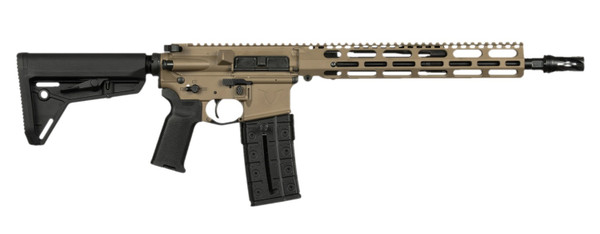
VKTR Industries VK-1PW 5.56 NATO SBR Rifle 13.7 Inch Flat Dark Earth
VKTR INDUSTRIESOUR PRICE: $2,399.00VKTR Industries VK-1PW 5.56 NATO SBR Rifle 13.7 Inch Flat Dark Earth The VKTR Industries VK-1PW is a compact rifle chambered in 5.56 NATO and configured with a 13.7-inch threaded barrel, 10+1... -

VKTR Industries VK-1PW 5.56 NATO SBR Rifle 13.7 Inch Sniper Gray
VKTR INDUSTRIESOUR PRICE: $2,399.00VKTR Industries VK-1PW 5.56 NATO SBR Rifle 13.7 Inch Sniper Gray The VKTR Industries VK-1PW is a compact rifle chambered in 5.56 NATO and configured with a 13.7-inch barrel, 10+1 capacity, and a... -

Patriot Ordnance Factory Rogue 308 Win Short-Barreled Rifle 12.5 Inch Black
Patriot Ordnance FactoryOUR PRICE: $1,347.99Patriot Ordnance Factory Rogue 308 Win Short-Barreled Rifle 12.5 Inch Black The Patriot Ordnance Factory Rogue SBR is a compact semi-automatic rifle chambered in 308 Winchester. Its 12.5-inch...
