
Raven Rock Armory
Semi-Automatic Rifles for Range, Hunting & Sporting Use
Shop semi-automatic rifles from leading firearm manufacturers at Raven Rock Armory. Compare centerfire and rimfire platforms by caliber, action design, barrel length, magazine system, stock, handguard, sights, optic compatibility, trigger, finish, weight, and factory configuration for recreational shooting, hunting, competition, training, and other lawful sporting applications.
Learn more about semi-auto rifles, calibers, actions & configurations
Semi-automatic rifles include a diverse range of sporting firearms that automatically cycle the action after each shot while requiring a separate trigger press for each subsequent shot. Designs include modern sporting rifles, traditional hunting platforms, rimfire rifles, pistol-caliber carbines, and manufacturer-specific systems. Construction, operating system, magazines, controls, sights, and accessory compatibility vary substantially by model.
Semi-Automatic Rifles
Semi-auto rifles use energy generated during firing to operate the action and prepare the firearm for the next shot. Depending on the platform, the rifle may use gas operation, blowback, delayed operation, recoil operation, or another manufacturer-specific system.
Choosing a Semi-Auto Rifle
- Intended Use: Consider recreational shooting, hunting, competition, training, collecting, or another lawful sporting application.
- Caliber: Compare ammunition availability, recoil, magazine compatibility, firearm weight, and intended application.
- Action: Review the manufacturer's operating system, controls, cleaning requirements, and recommended maintenance.
- Ergonomics: Compare stock dimensions, grip shape, controls, weight, balance, and length of pull.
- Sights & Optics: Determine whether the rifle includes iron sights, an optic rail, scope mounting provisions, or another sighting interface.
Centerfire Semi-Auto Rifles
Centerfire semi-automatic rifles are offered in a wide variety of cartridges and configurations for hunting, target shooting, competition, and recreational range use.
Rimfire Semi-Auto Rifles
Rimfire semi-auto rifles are popular for recreational shooting, introductory training, small-game hunting where lawful, target shooting, and competition.
.22 LR Semi-Auto Rifles
.22 LR is one of the most widely available semi-automatic rifle chamberings and is offered in traditional sporting rifles, competition models, takedown configurations, and modern-style platforms.
.22 WMR Semi-Auto Rifles
Selected manufacturers offer semi-automatic rifles chambered in .22 Winchester Magnum Rimfire. Magazine design and operating systems vary by platform.
5.56 NATO & .223 Rifles
Semi-automatic rifles chambered for 5.56 NATO, .223 Remington, or manufacturer-specified compatible chambers are widely available. Ammunition compatibility should always follow the exact firearm manufacturer's specifications.
.308 Winchester / 7.62 NATO Rifles
Larger-frame semi-auto rifles are offered in .308 Winchester, 7.62 NATO, and related configurations depending on manufacturer. Receiver, magazine, bolt, and operating-system dimensions can differ substantially between platforms.
6.5 Creedmoor Semi-Auto Rifles
6.5 Creedmoor is available in selected semi-automatic platforms intended for sporting, hunting, competition, and precision-oriented shooting.
Pistol-Caliber Carbines
Some semi-auto rifles use cartridges more commonly associated with handguns. These pistol-caliber carbines vary in magazine system, action type, barrel length, controls, stock design, and accessory compatibility.
9mm Carbines
9mm semi-automatic carbines are available in traditional rifle layouts and modern platforms. Magazine compatibility varies and may be proprietary or based on a particular handgun-magazine family.
Traditional Sporting Rifles
Traditional semi-auto sporting rifles may use wood or synthetic stocks, conventional hunting-style ergonomics, internal or detachable magazines, and receiver-mounted scope provisions.
Modern Sporting Rifles
Modern semi-auto rifles may include modular handguards, adjustable stocks, accessory rails, pistol grips, detachable magazines, ambidextrous controls, threaded barrels, and optics-ready configurations.
Gas-Operated Rifles
Gas-operated rifles redirect a portion of propellant gas to operate the action according to the firearm's design. Gas-system layout and components vary significantly among platforms.
Piston-Operated Rifles
Some semi-auto rifles use short- or long-stroke piston systems. Components and maintenance procedures are generally specific to the firearm manufacturer.
Blowback-Operated Rifles
Blowback operation is common in some rimfire and pistol-caliber semi-auto rifles. Bolt mass, springs, receiver design, and cartridge specifications are matched by the manufacturer.
Delayed-Operating Systems
Certain semi-auto platforms use delayed operating mechanisms. Internal construction and maintenance requirements vary by design and should be understood from the owner's manual.
Detachable Magazines
Many semi-automatic rifles use removable box magazines. Magazine compatibility depends on platform, caliber, firearm generation, and manufacturer.
Internal Magazines
Some traditional sporting rifles use fixed internal magazines rather than detachable box magazines. Capacity and loading method vary by firearm.
Tubular Magazines
Tubular magazines are common on certain rimfire semi-automatic rifles. Capacity depends on tube length and cartridge dimensions.
Magazine Capacity
Factory magazine capacity varies according to caliber, magazine system, product configuration, manufacturer, distributor package, and jurisdiction.
Barrel Length
Barrel length influences overall dimensions, weight, sight radius, balance, ammunition performance, accessory configuration, and legal classification.
Barrel Profiles
Sporting rifles may use lightweight, standard, medium, heavy, tapered, fluted, bull, or other manufacturer-specific barrel profiles.
Barrel Materials
Barrels may use chrome-moly steel, stainless steel, carbon-fiber wrapped construction, or other manufacturer-specified materials.
Barrel Finishes
Common treatments and finishes include bluing, nitriding, phosphate, stainless construction, Cerakote, chrome lining, and other manufacturer-specific processes.
Twist Rate
Rifling twist rate influences how different projectiles are stabilized. Use manufacturer recommendations when matching ammunition to the exact rifle and barrel.
Threaded Barrels
Some semi-auto rifles include factory-threaded muzzles. Thread pitch varies by caliber and manufacturer, so compatibility should be confirmed before selecting any muzzle accessory.
Muzzle Devices
Factory rifles may include flash hiders, brakes, compensators, thread protectors, or other muzzle components depending on model.
Stocks
Semi-auto rifles may use traditional fixed stocks, adjustable stocks, folding stocks, chassis systems, or other rear configurations depending on the platform.
Traditional Rifle Stocks
Hunting-style stocks may be constructed from hardwood, laminate, polymer, composite materials, or other manufacturer-specified materials.
Adjustable Stocks
Adjustable stocks can provide multiple length-of-pull positions or manufacturer-specific comb and buttpad adjustments.
Folding Stocks
Certain factory rifles include folding stocks. Folding mechanisms, lockup, dimensions, and legal configuration vary.
Length of Pull
Length of pull is the distance from the trigger to the rear surface of the stock. Fit can influence comfort, eye position, and rifle handling.
Handguards & Forends
Semi-auto rifles may use traditional forearms, polymer handguards, free-floating aluminum handguards, ventilated designs, or manufacturer-specific systems.
Accessory Rails
Picatinny, M-LOK, and other mounting interfaces may be provided for compatible sporting accessories. Availability varies by rifle.
Optics-Ready Rifles
Many semi-auto rifles include receiver rails, integral bases, drilled-and-tapped receivers, or other mounting provisions for compatible optics.
Rifle Scopes
Magnified scopes may be selected according to rifle type, intended distance, mounting interface, eye relief, and sporting application.
Red-Dot Sights
Red-dot sights are commonly used on modern semi-auto rifles and some rimfire platforms. Appropriate mounting height and rail compatibility should be verified.
LPVOs
Low-power variable optics provide adjustable magnification and are commonly paired with modern sporting rifles.
Iron Sights
Some semi-auto rifles include factory iron sights while others are designed primarily for optical sights.
Adjustable Iron Sights
Hunting, target, rimfire, and tactical-style rifles may use windage- and elevation-adjustable iron sights depending on design.
Trigger Systems
Semi-auto rifle triggers vary in pull weight, shape, travel, reset, single-stage or two-stage configuration, and internal construction.
Single-Stage Triggers
Single-stage triggers generally provide one primary movement toward the trigger break. Exact characteristics vary by model.
Two-Stage Triggers
Two-stage triggers provide an initial stage followed by a distinct second stage before the break and are available on some sporting and precision-oriented rifles.
Safety Controls
Semi-auto rifles may use cross-bolt, tang, lever, rotary, selector, trigger-block, or other manufacturer-specific safety systems.
Charging Handles
Charging or operating handles may be mounted on the side, top, receiver, bolt, or another location depending on firearm design.
Bolt Releases
Some semi-automatic rifles include dedicated bolt-release or bolt-catch controls, while others use different action-management procedures.
Ambidextrous Controls
Certain modern rifles include ambidextrous or reversible safeties, charging handles, magazine releases, or other controls.
Rifle Weight
Overall weight depends on barrel, stock, receiver, handguard, magazine, optic, sights, muzzle device, and installed accessories.
Lightweight Semi-Auto Rifles
Lightweight platforms may use thinner barrels, synthetic stocks, reduced-mass handguards, alloy receivers, or other design choices intended to reduce total weight.
Heavy-Barrel Rifles
Target, varmint, or precision-oriented rifles may use heavier barrel profiles and stocks, resulting in greater total weight.
Recoil Characteristics
Perceived recoil depends on caliber, ammunition, rifle weight, operating system, stock design, muzzle configuration, and individual shooter factors.
Rifles for Range Use
Range-oriented buyers may prioritize ammunition availability, reliability, ergonomics, sighting options, magazine availability, maintenance, and overall shooting comfort.
Semi-Auto Hunting Rifles
Semi-automatic rifles are available in numerous hunting cartridges and configurations. Hunters should verify current caliber, magazine, firearm, season, and species requirements where they plan to hunt.
Competition Rifles
Competition-oriented semi-auto rifles may feature specialized triggers, barrels, stocks, handguards, muzzle devices, controls, and optics depending on discipline.
Rimfire Competition Rifles
Semi-auto rimfire platforms are widely used in several target and action-shooting disciplines and may include upgraded triggers, barrels, stocks, sights, or other competition features.
Takedown Rifles
Some semi-auto rifles are designed to separate into major sections for compact transport or storage. Assembly and disassembly should follow manufacturer instructions.
Cleaning Semi-Auto Rifles
Follow the owner's manual for unloading, field stripping, bore cleaning, action cleaning, lubrication, inspection, and reassembly.
Bolt & Action Maintenance
Bolt assemblies, extractors, springs, operating rods, carriers, and other action components should be maintained according to manufacturer guidance.
Gas-System Maintenance
Gas-operated rifles may have manufacturer-specific maintenance procedures for pistons, gas blocks, tubes, regulators, or other components.
Blowback-System Maintenance
Blowback-operated rifles may accumulate fouling in different areas than gas-operated designs. Follow the exact maintenance guidance for the firearm.
Bore & Chamber Cleaning
Use cleaning tools and solvents compatible with the firearm's caliber, barrel material, finish, and manufacturer recommendations.
Magazine Maintenance
Magazines should be inspected for damaged feed lips, springs, followers, floorplates, bodies, or other components that could affect normal operation.
Ammunition Compatibility
Use only ammunition specifically approved for the exact rifle chambering. Similar cartridge names do not automatically indicate interchangeability.
Specialty Ammunition
Manufacturer recommendations regarding remanufactured, reloaded, specialty, steel-case, or higher-pressure ammunition vary by firearm.
Rifle Storage
Semi-auto rifles should be stored securely according to applicable law, household circumstances, manufacturer guidance, and responsible firearm-storage practices.
Rifle Cases
Soft and hard cases are available in different sizes and layouts. Account for the rifle's complete configured length, optics, muzzle devices, magazines, and mounted accessories.
Gun Safes
Long-gun safes and secure storage systems provide controlled access and organized storage. Actual safe capacity can vary with rifle dimensions and installed optics.
Transporting Semi-Auto Rifles
Transportation laws vary by state, locality, and destination. Review applicable requirements for firearms, cases, vehicles, ammunition, and magazines before travel.
Legal Configuration
Semi-automatic rifles can be subject to different legal requirements depending on barrel length, overall configuration, model, magazine, and jurisdiction. Current law should be verified for the exact firearm.
State & Local Restrictions
Some jurisdictions regulate particular semi-automatic rifle models, features, magazine capacities, transfers, or possession. These requirements can change and should be verified before ordering.
FFL Transfer Requirements
Semi-automatic rifles purchased online generally must be transferred through a federally licensed firearms dealer when required by law. Buyer eligibility and transfer procedures depend on the transaction and jurisdiction.
Manufacturer Differences
Semi-auto rifles with similar general descriptions can use entirely different operating systems, magazines, receiver dimensions, stocks, barrels, controls, sights, and replacement components.
Compare Exact Model, SKU & UPC
Verify the manufacturer's model number, SKU, UPC, caliber, barrel length, capacity, action, stock, sights, optic interface, muzzle configuration, finish, weight, and included accessories before ordering.
Always Verify Manufacturer Specifications
Semi-automatic rifle chambering, operating system, barrel length, magazine capacity, stock, sights, optics compatibility, controls, trigger, weight, finish, accessory interface, included equipment, and legal configuration vary by manufacturer and model. Always review the current manufacturer's specifications for the exact firearm being considered.
Filter By
Products List
-

Kriss Vector CRB .45 ACP 16-inch Semi-Automatic Rifle with Folding/Telescoping Stock
Kriss USAOUR PRICE: $1,931.99Kriss USA KV453CWD03 Vector CRB *CA Compliant 45 ACP 10rd 16" Black Nitride Folding/Telescoping Kriss USA Vector CRB .45 ACP 16-inch Semi-Automatic Rifle is a centerfire tactical rifle chambered in... -

DAVTAC DTC-IS1022 Ruger 10/22 Rimfire Rifle 22 LR w/ Magpul
DAVTAC CUSTOM ARMSOUR PRICE: $1,248.99The DAVTAC CUSTOM ARMS DTC-IS1022 is a Ruger 10/22 rifle chambered in 22 LR. This rimfire rifle is identified with a Magpul configuration and is designed for customers seeking a rifle platform in the... -

Rossi Rimfire Rifle 22 LR 18 Inch Barrel Gray Finish
RossiOUR PRICE: $171.99Rossi RS22 22 LR 10+1 18" Black Matte Barrel, Black Aluminum 3/8" Dovetail Receiver, Fixed Gray Synthetic Stock The Rossi is a reliable and versatile rimfire rifle designed for target shooting,... -

Ruger 10/22 Takedown .22 LR 18.5" Threaded Barrel 25-Round Stainless Rifle
RugerOUR PRICE: $453.99The Ruger 10/22 Takedown combines the legendary reliability of the Ruger 10/22 platform with a convenient quick-separation design for easy transport and storage. Chambered in .22 Long Rifle, this... -

Barrett M107A1 .50 BMG Semi-Automatic Rifle 29" Fluted Barrel Flat Dark Earth
BarrettOUR PRICE: $14,186.00Barrett M107A1 .50 BMG Semi-Automatic Rifle 29" Fluted Barrel Flat Dark Earth The Barrett M107A1 is a battle-proven semi-automatic rifle chambered in the legendary .50 BMG cartridge, engineered for... -
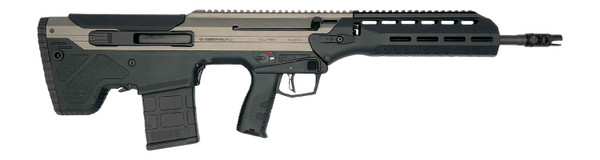
Desert Tech WLVRN 6.5 Creedmoor Semi-Auto Rifle / 20-Inch Threaded Barrel and Ambidextrous Stock
Desert TechOUR PRICE: $2,568.99The Desert Tech WLVRN is a third-generation semi-automatic bullpup rifle designed for precision shooting and tactical applications. Featuring an integrated receiver and a rugged chassis stock, the... -

Thompson M1 Tommy Gun / Lightweight Carbine .45 Caliber / Walnut Polymer Stock
ThompsonOUR PRICE: $1,103.99Thompson M1 Lightweight Carbine .45 Caliber with Walnut Polymer Stock The Thompson M1 Carbine, chambered in .45 ACP, features a 16.5-inch aluminum alloy barrel and a fixed walnut grain polymer stock... -

Auto Ordnance Thompson 1927A-1 Deluxe Carbine in 45 ACP with Walnut Stock
Auto OrdnanceOUR PRICE: $2,417.99Auto-Ordnance T1ABTG 1927A-1 Deluxe Special Edition Carbine 45 ACP 20+1 18" Black Compensated Barrel, Black Steel w/Titanium Gold Appointments Receiver, American Walnut Furniture, Gold Plated... -

Kriss Vector CRB G3 .45 ACP 16-inch Semi-Auto Rifle / Folding Stock
Kriss USAOUR PRICE: $1,839.99Kriss USA KV453CAD00 Vector CRB Gen3 45 ACP 30+1 16" Black Nitride Threaded Barrel, Arctic Delta Cerakote Receiver w/Picatinny Rail, M-LOK Handguard, Adjustable Folding Black Stock, White Polymer... -

Thompson 1927A-1C Lightweight Deluxe .45 Caliber Rifle / Walnut Furniture
ThompsonOUR PRICE: $1,748.99Thompson T550D 1927A-1 Lightweight Carbine 45 ACP 20+1/50+1 16.50" Blued Aluminum Alloy Barrel & Receiver, Walnut Grain Fixed Stock & Grip The Thompson 1927A-1C Lightweight Deluxe is a classic... -
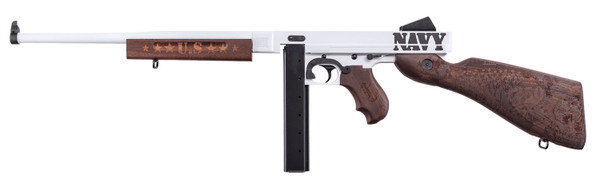
Thompson TM1C5 Navy 45 ACP Carbine with Custom Marine Tribute
ThompsonOUR PRICE: $2,127.99Thompson TM1C5 Navy 250th Anniversary 45 ACP 30+1 16.50" Arctic White & Savage Stainless Cerakote Arctic Steel Barrel & Receiver, Engraved Walnut Fixed Stock, Engraved Wood Grip Thompson TM1C5 Navy... -

Thompson TM1C6 Marine Tribute Carbine in .45 ACP with 16.5-inch Barrel
ThompsonOUR PRICE: $2,127.99Thompson TM1C6 Marines 250th Anniversary 45 ACP 30+1 16.50" Midnight Blue Cerakote Barrel, Midnight Blue/Stormtrooper White Cerakote Steel Receiver, Engraved Walnut Fixed Stock, Engraved Wood...
