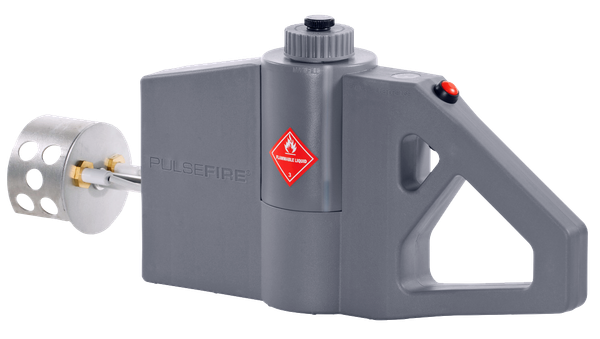
Flamethrower

Raven Rock Armory

Flamethrowers & Specialized Flame-Projecting Equipment

Browse commercially manufactured flamethrowers and specialized flame-projecting equipment at Raven Rock Armory when available. Compare factory products by manufacturer, overall dimensions, construction materials, capacity, weight, controls, finish, included accessories, intended applications, and current manufacturer specifications while reviewing all applicable fire, possession, transport, and local-use restrictions.

Learn more about flamethrower products, storage, safety & legal considerations

Commercial flamethrowers are specialized devices designed to project flame through a manufacturer-engineered system. Products can vary substantially in construction, dimensions, capacity, control systems, weight, storage requirements, and intended applications. These devices involve extreme heat and fire hazards and should only be handled according to the manufacturer's instructions and all applicable laws, fire restrictions, and property rules.

Commercial Flamethrowers

Modern commercially manufactured flamethrowers are distinct from conventional firearms and may be classified differently depending on jurisdiction. Buyers should review the exact product rather than assuming its legal status from the category name alone.

Choosing a Flamethrower

  • Manufacturer: Compare established factory products and current manufacturer specifications.
  • Overall Size: Review dimensions, weight, carrying configuration, and storage requirements.
  • Construction: Compare factory materials, tank or reservoir construction, protective components, and finish.
  • Controls: Review manufacturer-designed safety controls, activation systems, indicators, and shutdown features.
  • Legal Requirements: Verify state, local, fire-code, land-use, transport, and destination restrictions before ordering or use.

Factory-Built Equipment

Commercial units should be evaluated according to their original factory configuration, manufacturer documentation, serial or model information, and intended use.

Product Construction

Flamethrower systems may incorporate metal, polymer, seals, hoses, tanks, controls, protective housings, and other specialized components. Construction varies by manufacturer and model.

Reservoir Construction

Reservoir dimensions, materials, pressure ratings, capacity, service requirements, and storage instructions are manufacturer-specific.

Overall Dimensions

Product length, width, height, carrying arrangement, and other dimensions should be compared using current manufacturer specifications.

Product Weight

Weight depends on frame construction, reservoir design, controls, carrying hardware, protective components, and factory configuration.

Handheld Configurations

Selected commercial products use a handheld form factor, while others may incorporate additional support or carrying components. Exact design should be evaluated by model.

Backpack-Style Systems

Some specialized products may use a separate reservoir and carrying system. Manufacturer instructions should govern assembly, storage, inspection, and lawful operation.

Safety Controls

Factory products may include switches, valves, covers, locks, indicators, guards, or other manufacturer-designed controls.

Control Identification

Users should understand every factory control and warning before handling the device. Control layouts and functions vary between manufacturers.

Protective Guards

Certain models use guards or housings intended to protect controls or components during storage and transport.

Factory Accessories

Packages may include manufacturer-specific carrying hardware, protective components, tools, cases, manuals, or other accessories. Included equipment varies by SKU.

Replacement Components

Replacement components should be sourced according to exact manufacturer model and part information rather than visual similarity.

Manufacturer Service Parts

Seals, hoses, fittings, hardware, controls, and other service parts can be model-specific. Follow manufacturer service guidance.

Do Not Assume Parts Compatibility

Components that appear similar may have different materials, pressure ratings, dimensions, or intended applications.

Inspection

Equipment should be inspected at intervals recommended by the manufacturer for visible damage, corrosion, leakage, degraded hoses, damaged seals, loose hardware, or other concerns.

Damaged Equipment

A flamethrower with suspected leaks, corrosion, damaged controls, compromised pressure components, or other visible defects should not be used until evaluated according to manufacturer guidance.

Pressure Components

Where a factory product incorporates pressurized components, all manufacturer pressure limits, service requirements, inspection procedures, and warnings must be followed.

Seals & Hoses

Seals, hoses, fittings, and connections can deteriorate with age, heat, storage conditions, or physical damage. Replacement intervals and inspection requirements are manufacturer-specific.

Factory Maintenance

Maintenance should follow the exact manufacturer's manual, including inspection, cleaning, service intervals, approved replacement components, and storage procedures.

Professional Service

Suspected mechanical, pressure-system, ignition-system, or control problems should be addressed through the manufacturer or qualified service personnel rather than unauthorized modification.

Unauthorized Modification

Modifying factory safety systems, pressure components, ignition components, reservoirs, or other critical assemblies can create serious fire, injury, property-damage, and legal risks.

Storage

Flamethrowers should be stored securely in accordance with manufacturer requirements, applicable fire codes, local laws, property rules, and safe-storage practices.

Secure Storage

Storage should prevent unauthorized access and protect the device from children, excessive heat, ignition sources, corrosion, impact, and other hazardous conditions.

Indoor Storage

Indoor storage requirements may be influenced by fire codes, building policies, hazardous-material rules, and the condition in which the device is stored.

Garage & Outbuilding Storage

Garages and outbuildings can experience extreme temperatures and other environmental conditions. Follow manufacturer and local fire safety requirements.

Vehicle Storage

Vehicles can experience high temperatures and impact risks. Flamethrowers and associated regulated or hazardous components should not be left in conditions prohibited by the manufacturer or applicable law.

Transport Cases

Protective cases can help shield controls and components during lawful transport. Case dimensions and configuration should match the exact product.

Transporting Flamethrowers

Transportation requirements may depend on the device, destination, associated materials, carrier policy, local fire code, vehicle rules, and jurisdiction.

Commercial Carrier Restrictions

Common carriers may restrict flamethrowers or associated hazardous components even where ownership of the device itself is lawful.

Shipping Restrictions

Shipping eligibility depends on the exact product, packaging, destination, carrier rules, hazardous-material requirements, and applicable state or local law.

Air Travel

Flamethrowers and associated hazardous or pressurized components can be heavily restricted or prohibited in commercial aviation. Current airline and transportation-authority rules should be checked before travel.

Interstate Transport

A product lawful in one jurisdiction may be restricted elsewhere. Review requirements for the destination and locations traveled through before interstate transport.

State Restrictions

States may regulate flamethrowers through possession restrictions, permits, fire codes, hazardous-material rules, discharge restrictions, or other provisions.

Local Restrictions

Counties, cities, fire districts, municipalities, and other local authorities may impose additional restrictions.

Fire Codes

Local fire codes can regulate use, storage, hazardous materials, open flame, burning, or equipment operation independently of general ownership laws.

Burn Bans

Temporary burn restrictions can prohibit or severely limit flame- producing equipment during periods of elevated fire danger.

Wildfire Conditions

Dry vegetation, wind, drought, heat, and wildfire conditions can make flame-producing equipment exceptionally hazardous. Current local fire restrictions should always be checked.

Public Land

Federal, state, county, tribal, and other public lands may prohibit flame-producing devices or impose seasonal fire restrictions.

Private Property

Property ownership does not automatically eliminate fire-code, environmental, burn-ban, zoning, nuisance, or other legal restrictions.

Industrial & Agricultural Use

Certain commercially manufactured flame-producing products may be marketed for specialized lawful applications. Any such use remains subject to manufacturer instructions and applicable fire, environmental, workplace, and property rules.

Training & Familiarization

Anyone handling specialized flame-producing equipment should first understand the manufacturer's safety controls, warnings, inspection requirements, emergency procedures, storage rules, and applicable laws.

Personal Protective Equipment

Manufacturer instructions may specify protective clothing, eye protection, gloves, hearing protection, footwear, or other safety equipment appropriate to the product and environment.

Eye Protection

Heat, flame, debris, pressurized components, and environmental hazards can present risks to the eyes. Follow manufacturer safety requirements.

Protective Clothing

Clothing used around flame-producing equipment should comply with manufacturer guidance and the requirements of the specific lawful application.

Fire Extinguishing Equipment

Suitable fire-control resources should be determined according to local fire authority guidance, manufacturer requirements, and the environment where lawful equipment is being handled.

Emergency Planning

Specialized flame-producing equipment should never be handled without considering fire response, emergency communication, surrounding property, weather conditions, and other environmental hazards.

Manufacturer Manuals

The current manufacturer's manual should be the primary source for inspection, maintenance, storage, safety warnings, approved components, and lawful operation of the exact model.

Product Identification

Similar-looking devices may differ significantly in construction, capacity, safety systems, materials, ratings, and legal treatment. Identify products by exact manufacturer and model.

Age Requirements

Minimum purchase or possession age may vary by retailer policy, product type, destination, and jurisdiction.

Retail Restrictions

Retailers may impose additional purchase, shipping, pickup, or verification requirements based on product risk, carrier policy, insurer requirements, or applicable law.

Legal Classification

Flamethrower classification is not uniform across every jurisdiction. Buyers should verify the status of the exact product under current federal, state, and local law.

Firearm Classification

A commercially manufactured flamethrower should not automatically be assumed to be legally classified the same way as a conventional firearm. The exact product and applicable jurisdiction control.

Possession vs. Use

Legal possession does not necessarily mean a device may be operated anywhere or at any time. Use may be separately limited by fire, property, environmental, zoning, or local laws.

Insurance & Property Rules

Insurance policies, leases, event venues, ranges, commercial properties, and landowners may impose restrictions independent of general ownership law.

Environmental Regulations

Flame-producing equipment may be subject to environmental, vegetation, air-quality, agricultural, or open-burning requirements depending on location and intended use.

Weather Conditions

Wind, temperature, drought, humidity, surrounding vegetation, and local fire danger can substantially affect risk. Follow fire authority restrictions and manufacturer warnings.

Extreme Heat

Flamethrower operation involves extreme heat. Equipment should be allowed to cool and handled only as directed by the manufacturer.

Post-Use Inspection

After lawful manufacturer-approved use, equipment should be inspected, allowed to cool, maintained, and stored according to the owner's manual.

Corrosion Prevention

Metal components should be kept clean and protected according to manufacturer guidance, particularly after exposure to moisture, dirt, chemicals, or adverse environmental conditions.

Long-Term Storage

Long-term storage should follow manufacturer recommendations for pressure systems, seals, hoses, batteries where applicable, and other service-sensitive components.

Manufacturer Warranty

Warranty terms may depend on proper use, maintenance, authorized parts, service history, and compliance with manufacturer instructions.

Compare Exact Model, SKU & UPC

Flamethrower products with similar names may differ by dimensions, reservoir design, capacity, construction materials, controls, weight, finish, safety systems, included accessories, shipping classification, or manufacturer package. Verify the exact model number, SKU, UPC, and current specifications before ordering.

Always Verify Current Restrictions

Laws, fire codes, burn bans, shipping requirements, carrier policies, possession rules, storage requirements, land-use restrictions, and local regulations can change. Verify current requirements for the exact product, destination, and intended lawful use.

Always Verify Manufacturer Specifications

Flamethrower dimensions, capacity, construction, controls, pressure ratings, safety systems, maintenance requirements, storage procedures, approved components, included accessories, and product warnings vary by manufacturer and model. Always review the current manufacturer documentation for the exact product being considered.

Products List

Filters

Sort By:

Display Type: