
Raven Rock Armory
Spotting Scopes & Long-Range Observation Optics
Shop spotting scopes and long-range observation optics at Raven Rock Armory. Compare variable-power spotting scopes, angled and straight-body designs, high-magnification optics, coated lenses, weather-resistant housings, and tripod-ready models for hunting, range spotting, wildlife observation, scouting, and outdoor use.
Learn more about choosing a spotting scope
Spotting scopes are high-magnification observation optics designed for viewing distant subjects in greater detail than typical handheld binoculars. They are commonly used for hunting, target observation, wildlife viewing, scouting, and extended glassing from a supported position.
Spotting Scopes for Hunting
Hunters can use spotting scopes to evaluate terrain and observe distant wildlife from a fixed glassing position. Important considerations include optical clarity, low-light performance, magnification range, weight, objective size, weather resistance, and how easily the optic can be carried with a tripod.
Range Spotting Scopes
Spotting scopes are also useful at shooting ranges where greater magnification can make distant targets easier to observe without repeatedly moving between the firing line and target area. Optical resolution and atmospheric conditions both affect how much detail can be seen at longer distances.
Understanding Magnification
Spotting scopes are commonly offered with variable magnification, such as 15-45x, 20-60x, or similar ranges. Higher magnification provides additional image detail, but usable image quality also depends on lens quality, lighting, atmospheric conditions, tripod stability, and objective size.
Choosing a Spotting Scope
- Magnification Range: Select a range appropriate for typical viewing distances, terrain, target size, and intended use.
- Objective Diameter: Larger objectives can gather more light but generally increase the optic's size and weight.
- Body Style: Compare angled and straight eyepiece configurations based on viewing position and personal preference.
- Tripod Compatibility: Confirm that the spotting scope can be securely mounted to the intended tripod or support system.
Angled vs. Straight Spotting Scopes
Angled spotting scopes position the eyepiece at an angle to the optical body, while straight scopes keep the eyepiece in line with the objective lens. Angled designs can be comfortable for shared viewing or elevated observation, while straight designs may make it easier to locate subjects quickly from certain positions.
Objective Lens Size
Objective-lens diameter influences the amount of light entering the optic. Larger objectives can support brighter images under reduced light, but they add size and weight. Compact spotting scopes may be easier to carry during hunts and travel.
Optical Quality & Lens Coatings
Glass quality, lens coatings, prism design, internal baffling, and optical construction influence image resolution, contrast, brightness, glare control, and color accuracy. Optical quality becomes increasingly important as magnification increases.
Low-Light Performance
Hunters frequently glass near dawn and dusk, making low-light performance an important consideration. Objective size, magnification level, exit pupil, glass quality, and coatings all contribute to perceived brightness.
Field of View
Field of view generally narrows as magnification increases. A wider field of view can make it easier to locate and follow animals or scan terrain before increasing magnification for closer observation.
Tripods & Support Systems
Because spotting scopes use substantial magnification, a stable tripod or support system can significantly improve image stability and viewing comfort. Consider tripod weight, adjustment range, head design, mounting interface, and intended field conditions.
Weather Resistance & Durability
Field optics may encounter rain, snow, dust, temperature swings, and repeated transport. Compare manufacturer specifications for waterproofing, fog resistance, protective armor, housing construction, and operating temperature.
Eye Relief & Viewing Comfort
Eye relief is important during extended observation and for users who wear eyeglasses. Adjustable eyecups and properly designed eyepieces can improve comfort and help maintain the intended field of view.
Digiscoping & Camera Compatibility
Some spotting scopes can be paired with compatible smartphone or camera adapters for photography and video through the optic. Verify adapter, eyepiece, and device compatibility for the specific spotting scope before purchasing accessories.
Care & Storage
Remove loose dirt and debris before cleaning optical surfaces and use products intended for coated lenses. Store the scope dry and protected, and periodically inspect focus controls, eyecups, mounting points, lens caps, and housing for wear or damage.
Filter By
Products List
-
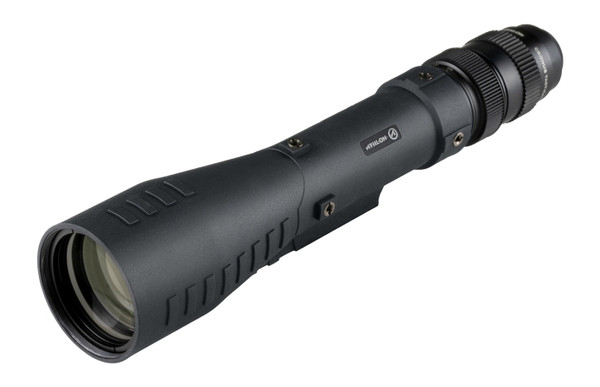
Athlon Cronus Tactical G2 7-42x60 ED Spotting Scope
AthlonOUR PRICE: $1,099.99ATHLON 311005 CRONUS TACTICAL G2 7-42X60 ED The Athlon Cronus Tactical G2 7-42x60 ED spotting scope is designed for long-range observation and precision targeting, making it ideal for hunting, target...
