
Raven Rock Armory
Holsters, Concealed Carry & Duty Carry Gear
Shop handgun holsters, concealed carry holsters, duty holsters, tactical holsters, shoulder holsters, ankle holsters, chest holsters, and compatible mounting accessories at Raven Rock Armory. Compare firearm fit, carry position, retention system, material, ride height, cant, mounting pattern, optic clearance, and weapon-light compatibility.
Learn more about choosing handgun holsters & carry systems
A handgun holster provides a secure method of carrying and accessing a compatible firearm. Holsters vary by firearm model, carry position, retention system, material, mounting method, concealment level, and intended application. Selecting the correct holster begins with confirming exact firearm compatibility.
Inside-the-Waistband Holsters
Inside-the-waistband, or IWB, holsters are designed to position most of the holster body inside the waistband. They are commonly used for concealed carry and may be worn at several positions around the waist depending on the holster design, firearm size, body type, and user preference.
Outside-the-Waistband Holsters
Outside-the-waistband, or OWB, holsters position the firearm outside the waistband and may attach using belt loops, paddles, clips, modular mounts, or duty-style attachment systems. OWB holsters are commonly used for range, field, duty, hunting, and open-carry applications.
Choosing a Holster
- Firearm Fit: Confirm the exact firearm manufacturer, model, generation, barrel length, and configuration.
- Carry Position: Determine whether the holster is intended for IWB, OWB, appendix, shoulder, chest, ankle, thigh, or another mounting position.
- Retention: Compare passive friction retention, adjustable retention, thumb-release systems, hood systems, locking mechanisms, and other retention designs.
- Accessories: Verify compatibility with mounted optics, weapon lights, lasers, threaded barrels, suppressor-height sights, or other firearm accessories.
- Hand Orientation: Confirm whether the holster is configured for right-hand, left-hand, or reversible use.
Appendix Carry Holsters
Appendix carry holsters are generally designed for inside-the- waistband positioning toward the front of the body. Some models use integrated magazine carriers, concealment wings, adjustable ride height, wedges, or other features intended to influence firearm positioning and concealment.
Duty Holsters
Duty holsters are typically designed for use with duty belts and may incorporate enhanced retention systems, reinforced materials, modular mounting hardware, or compatibility with specific firearm accessories. Retention features and mounting systems vary substantially between manufacturers and models.
Tactical & Drop-Leg Holsters
Tactical holster systems may use thigh platforms, low-ride belt mounts, modular adapters, straps, or other mounting configurations designed to position the firearm below or away from other carried equipment.
Shoulder Holsters
Shoulder holsters use harness systems that position a handgun and, in some designs, spare magazines or accessories beneath the arms. Fit, firearm orientation, strap adjustment, retention, and garment compatibility vary by design.
Chest Holsters
Chest holsters position the firearm across the torso and are often used in outdoor, hunting, hiking, backcountry, or field applications where waistband access may be restricted by packs, jackets, or other equipment.
Ankle Holsters
Ankle holsters are typically designed for compact or lightweight handguns and use wraps, straps, padding, or retention systems to position the firearm around the lower leg.
Holster Retention Systems
Holster retention refers to the methods used to help keep a firearm secured in the holster. Systems can include friction, molded retention points, adjustable screws, straps, hoods, thumb releases, locking mechanisms, or combinations of these features.
Passive Retention
Passive-retention holsters typically rely on the shape and tension of the holster body to retain the firearm. Many designs allow retention tension to be adjusted using screws or other hardware.
Active Retention
Active-retention holsters use a deliberate release mechanism such as a thumb lever, hood, strap, locking device, or other mechanism that must be disengaged before the handgun can be drawn.
Holster Materials
Holsters may be made from thermoplastic materials such as Kydex, injection-molded polymer, leather, nylon, laminate, hybrid constructions, or combinations of materials. Each construction method can influence rigidity, weight, comfort, durability, and retention.
Kydex & Molded Holsters
Molded holsters are generally shaped around a specific firearm or firearm family. Because small differences in slide dimensions, controls, accessory rails, optics, or weapon lights can affect fit, exact compatibility should always be verified.
Leather Holsters
Leather holsters may provide traditional appearance, flexibility, and a different feel than rigid molded designs. Leather may change shape or tension with use, moisture, storage conditions, and age, so regular inspection and proper maintenance are important.
Optic-Ready Holsters
Optic-ready holsters include clearance intended for certain slide-mounted red-dot sights. Optic size, position, mounting plate, sight height, and holster design can affect compatibility.
Weapon-Light Holsters
Light-bearing holsters are commonly molded around both the firearm and a specific weapon-mounted light. A holster designed around one light model may not properly retain the firearm when used with a different light.
Laser Compatibility
Frame-mounted lasers, trigger-guard lasers, grip lasers, and light-laser combinations can affect holster fit. Verify whether the holster manufacturer specifically lists the accessory configuration being used.
Threaded Barrels & Muzzle Devices
Some holsters provide open-bottom construction or additional clearance for threaded barrels or extended barrel configurations. Compatibility should be confirmed before assuming an extended barrel will fit.
Suppressor-Height Sights
Taller iron sights may require additional sight-channel clearance. Holsters designed for standard-height sights may not accommodate every suppressor-height or co-witness sight configuration.
Belt Mounts & Attachment Systems
Holsters may attach using belt loops, clips, paddles, hooks, modular forks, quick-disconnect systems, drop adapters, duty mounts, or manufacturer-specific interfaces. Verify belt width and mounting compatibility when selecting hardware.
Ride Height & Cant
Ride height describes how high or low the firearm sits relative to the belt, while cant describes the angle of the handgun. Some holsters provide adjustable ride height or cant to accommodate different carry positions or equipment configurations.
Holster Fit & Firearm Generations
Firearms with similar names are not always identical in external dimensions. Different generations, barrel lengths, frames, slides, controls, accessory rails, and manufacturer revisions can affect holster fit.
Compact vs. Full-Size Firearms
Holsters are generally designed around specific slide and frame dimensions. A holster for a compact firearm should not be assumed to properly fit a full-size version, even when both handguns belong to the same product family.
Magazine Carrier Compatibility
Some holster systems include integrated or detachable magazine carriers. Magazine width, length, baseplate design, orientation, and retention system can influence compatibility.
Holster Accessories
Holster accessories can include belt clips, loops, paddles, mounting forks, quick-disconnect adapters, drop platforms, thigh straps, concealment wings, wedges, retention hardware, and replacement components.
Inspecting a Holster
Regularly inspect the holster body, retention hardware, belt attachments, screws, rivets, stitching, straps, locking mechanisms, and mounting components for wear, looseness, cracks, deformation, or other damage.
Verify Fit Before Use
Holster fit and retention should be checked according to the manufacturer's instructions. Confirm that the handgun is fully seated, properly retained, and compatible with any installed optic, weapon light, laser, sight, barrel, or other accessory.
Always Follow Manufacturer Specifications
Holster compatibility, retention systems, mounting hardware, materials, firearm fit, accessory clearance, adjustment procedures, and maintenance requirements vary by manufacturer and product. Always review the current manufacturer's specifications for the exact holster and firearm configuration being used.
Filter By
Products List
-

Kingport Industries LLC GTM Large Satchel Crossbody Bag in Black
KINGPORT INDUSTRIES LLCOUR PRICE: $269.95GTM GTM-32/PB BLACK LARGE SATCHEL CROSSBODY-COW GTM GTM-32/PB Black Large Satchel Crossbody BagThe GTM Large Satchel Crossbody Bag from Kingport Industries LLC offers a spacious and versatile... -
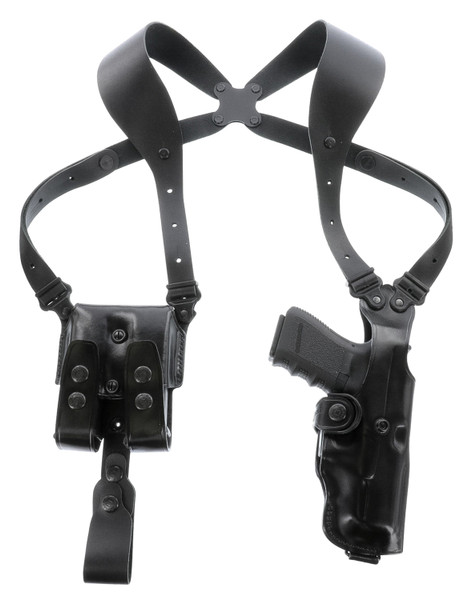
Galco VHS4212RB 4.0 VHS 1911 5-inch Concealed Carry Shoulder System in Black
GalcoOUR PRICE: $262.99Galco VHS4212RB VHS 4.0 Shoulder System Black Leather Fits 1911 Fits 5" Barrel Ambidextrous The Galco VHS4212RB 4.0 VHS shoulder holster system is designed for comfortable and secure concealed carry... -

Galco Miami Classic II Shoulder Holster System for S&W N Frame M29/629 in Tan
GalcoOUR PRICE: $256.99Galco MCII126 Miami Classic II Shoulder System Shoulder Size Fits Chest Up To 56"/S&W N Frame M29/629 Tan Steerhide Right Hand The Galco Miami Classic II shoulder holster offers an improved design...
