Optics & Sights Buying Guide: Scopes, Red Dots, LPVOs & More | Raven Rock Armory
Optics & Sights Buying Guide
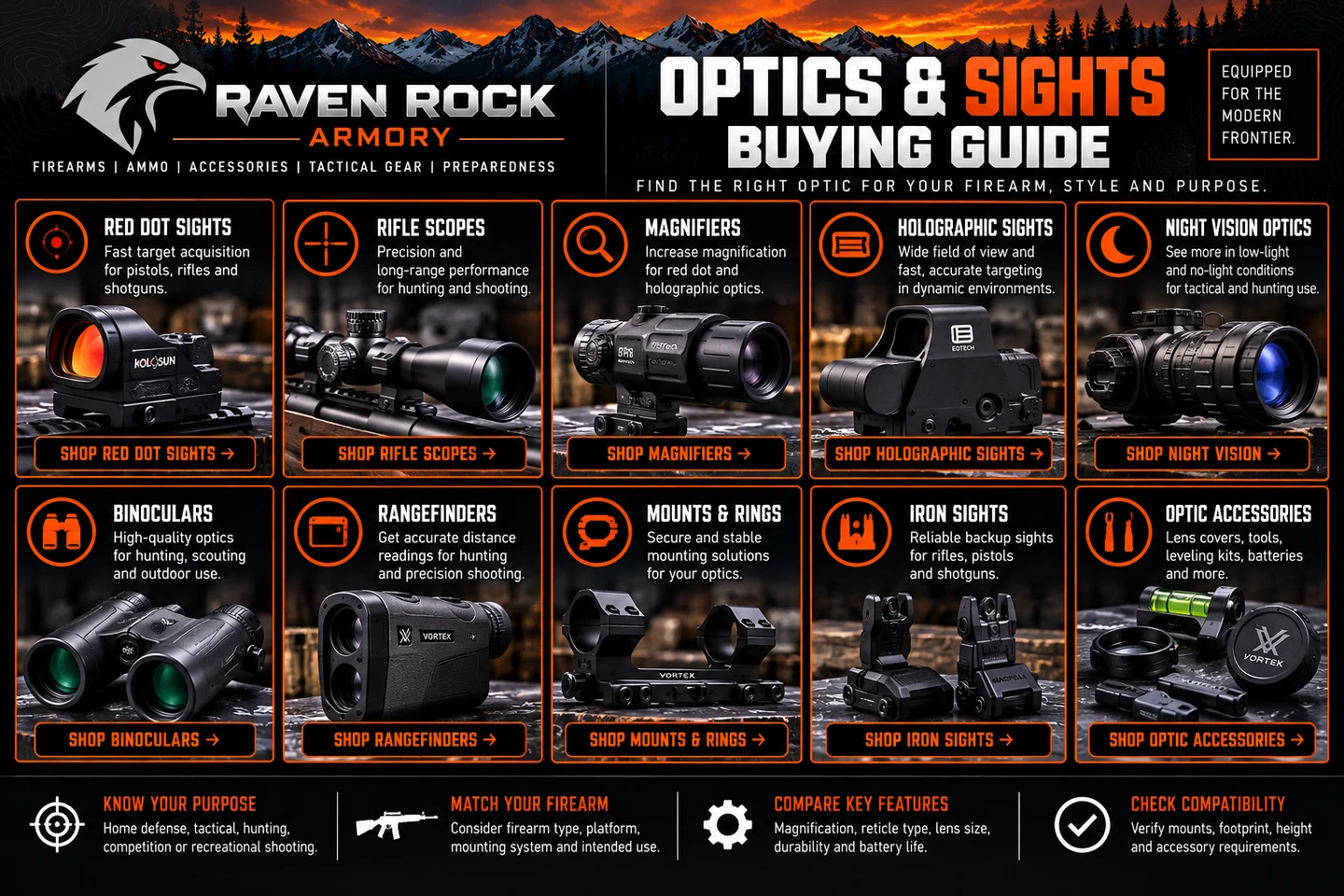
Understand the major firearm optics categories before you shop. Compare rifle scopes, red dots, prism optics, LPVOs, magnifiers, iron sights, thermal and night vision, rangefinders, binoculars and mounting accessories.
Browse Optics & Sights by Category
Start with the firearm or platform, intended viewing distance, magnification needs, field of view, reticle preference and mounting interface.
Rifle Scopes
Fixed- and variable-magnification scopes for hunting, range use, precision shooting and general rifle applications.
Shop Rifle Scopes → Non-Magnified Electronic SightsRed Dot Sights
Red dot and reflex sights for compatible pistols, rifles, shotguns and other firearm platforms.
Shop Red Dot Sights → Etched Reticle OpticsPrism Scopes
Compact prism optics commonly using an etched reticle with fixed magnification and optional illumination.
Shop Prism Scopes → Low-Power Variable OpticsLPVO Scopes
Low-power variable optics designed to provide adjustable magnification across a relatively broad working range.
Shop LPVO Scopes → Added MagnificationMagnifiers
Magnification units intended for use behind compatible red dot or holographic-style sights.
Shop Magnifiers → Mechanical SightsIron / Backup Sights
Fixed, adjustable and folding sight systems for compatible firearms and backup sighting setups.
Shop Iron Sights → Thermal ImagingThermal Optics
Thermal imaging optics and related products for compatible hunting, observation and field applications.
Shop Thermal Optics → Low-Light ObservationNight Vision
Night-vision optics and equipment for compatible low-light observation and field applications.
Shop Night Vision → Distance MeasurementRangefinders
Optical distance-measuring devices for hunting, range use, scouting and outdoor applications.
Shop Rangefinders → Observation OpticsBinoculars
Handheld observation optics for hunting, scouting, wildlife viewing and general outdoor use.
Shop Binoculars → Long-Distance ObservationSpotting Scopes
Higher-magnification observation optics for range use, hunting, scouting and distant viewing.
Shop Spotting Scopes → Mounting + ProtectionOptic Accessories
Scope bases, rings, mounts, optic plates, covers and related mounting or protection accessories.
Shop Optic Accessories →How to Choose the Right Optic or Sight
Choosing an optic begins with the firearm or platform, intended viewing distance and the type of sight picture you want. Magnification, field of view, reticle design, mounting interface, durability and overall weight can all affect whether an optic is appropriate for a particular setup.
Raven Rock Armory currently organizes Optics & Sights into rifle scopes, red dots, prism optics, LPVOs, magnifiers, iron sights, thermal optics, night vision, rangefinders, binoculars, spotting scopes and accessories.
Rifle Scopes
Rifle scopes use magnification to provide a more detailed view of distant targets or objects.
Fixed-power scopes use one magnification level, while variable scopes allow the magnification to change within a specified range. When comparing scopes, review magnification range, objective size, reticle, eye relief, tube diameter and adjustment system.
Red Dot & Reflex Sights
Red dot sights are generally non-magnified electronic sights that display an illuminated aiming point.
Important comparison points include dot size, brightness settings, battery type, mounting footprint, window size, dimensions and manufacturer compatibility.
Prism Scopes
Prism scopes use a prism-based optical system rather than the traditional lens arrangement found in many riflescopes. They commonly feature an etched reticle and may include illumination.
Prism optics are frequently compact and offered at fixed magnification levels. Review eye relief, reticle, magnification and mounting requirements when comparing models.
LPVO Scopes
LPVO scopes are low-power variable optics that combine lower magnification settings with the ability to increase magnification when desired.
Compare magnification range, reticle design, first- or second-focal-plane configuration, illumination, eye relief, weight and tube size.
Magnifiers
Magnifiers add magnification behind a compatible red dot or holographic-style sight.
Some mounts allow the magnifier to move out of the sight picture when magnification is not needed. Check height, mount type, eye relief and optic alignment before pairing products.
Iron & Backup Sights
Iron and backup sights provide a mechanical sighting system without relying on an electronic display.
Options can include fixed, adjustable and folding front and rear sights. Verify mounting interface, sight height and firearm compatibility.
Thermal Optics
Thermal optics display differences in thermal energy rather than relying on ordinary visible light.
Compare sensor resolution, display resolution, field of view, magnification, battery life, environmental rating and intended application.
Night Vision
Night Vision includes optics and equipment intended to improve visibility in low-light conditions.
Different technologies can have very different operating requirements, so compare the manufacturer's specifications, mounting method, power source and intended environment.
Rangefinders
Rangefinders provide electronic distance measurements for hunting, scouting, range use and other outdoor applications.
Compare maximum stated range, optical magnification, display type, ranging modes, weather resistance and battery requirements.
Binoculars
Binoculars provide handheld magnified observation without being mounted to a firearm.
Common comparison points include magnification, objective-lens diameter, field of view, weight, prism design and environmental protection.
Spotting Scopes
Spotting scopes provide higher-magnification observation for range use, hunting, scouting and distant viewing.
Consider magnification range, objective size, eyepiece configuration, tripod compatibility, weight and viewing conditions.
Optic Mounts, Rings & Accessories
Optic Accessories currently includes scope bases, rings, scope mounts, optic mounting plates, scope covers and shades.
Mounting compatibility is critical. Verify rail type, optic footprint, tube diameter, ring height, mounting length, recoil rating and manufacturer fitment before installing an optic.
Key Optic Specifications to Compare
Magnification
Determine whether the optic is non-magnified, fixed power or variable magnification.
Reticle or Dot
Compare reticle design, dot size, illumination and available brightness settings.
Field of View
Field of view affects how much of the surrounding scene can be seen through the optic.
Mounting Interface
Verify rail type, footprint, tube diameter, ring height and mounting compatibility.
Durability
Compare water resistance, fog resistance, impact resistance and manufacturer recoil ratings.
Power & Battery Life
Electronic optics can vary substantially in battery type, runtime and power-management features.
Find the Correct Optics Section
| What You Want to Browse | Start Here |
|---|---|
| Traditional fixed or variable magnified optics | Rifle Scopes |
| Non-magnified electronic sights | Red Dot Sights |
| Compact etched-reticle optics | Prism Scopes |
| Low-power variable magnification | LPVO Scopes |
| Add magnification behind a compatible red dot | Magnifiers |
| Mechanical or backup sights | Iron / Backup Sights |
| Heat-based imaging | Thermal Optics |
| Low-light observation technology | Night Vision |
| Measure distance | Rangefinders |
| Handheld magnified observation | Binoculars |
| Higher-magnification observation | Spotting Scopes |
| Rings, bases, mounts, plates and covers | Optic Accessories |
Compatibility note: Verify the firearm's mounting interface and the optic's footprint, tube diameter, required ring height, available mounting length and manufacturer compatibility before ordering. Correct mounting and proper torque are important for alignment and maintaining a repeatable zero.
Explore Optics & Sights at Raven Rock Armory
Browse rifle scopes, red dots, prism optics, LPVOs, magnifiers, iron sights, thermal and night vision, rangefinders, binoculars, spotting scopes and mounting accessories.
Shop Optics & Sights →Common Optic & Sight Questions
What is the difference between a red dot and a rifle scope?
A red dot is typically a non-magnified electronic sight, while a rifle scope uses an optical system that can provide fixed or variable magnification.
What is an LPVO?
LPVO stands for low-power variable optic. It provides adjustable magnification beginning at a relatively low setting and increasing through a specified magnification range.
What is a prism scope?
A prism scope uses a prism-based optical system and commonly includes an etched reticle. Many prism sights are compact and use fixed magnification.
What does a magnifier do?
A magnifier increases the apparent magnification when positioned behind a compatible red dot or holographic-style sight.
What is the difference between thermal and night vision?
Thermal optics form an image from differences in thermal energy, while night-vision systems use technologies designed to improve visibility in low-light conditions.
How do I know which mount or rings I need?
Check the firearm's rail or mounting interface, the optic's footprint or tube diameter, required height, available mounting length and manufacturer compatibility information.
Explore Popular Articles