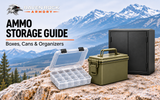
How to Store Ammo Safely: Boxes, Cans & Organizers | Raven Rock Armory
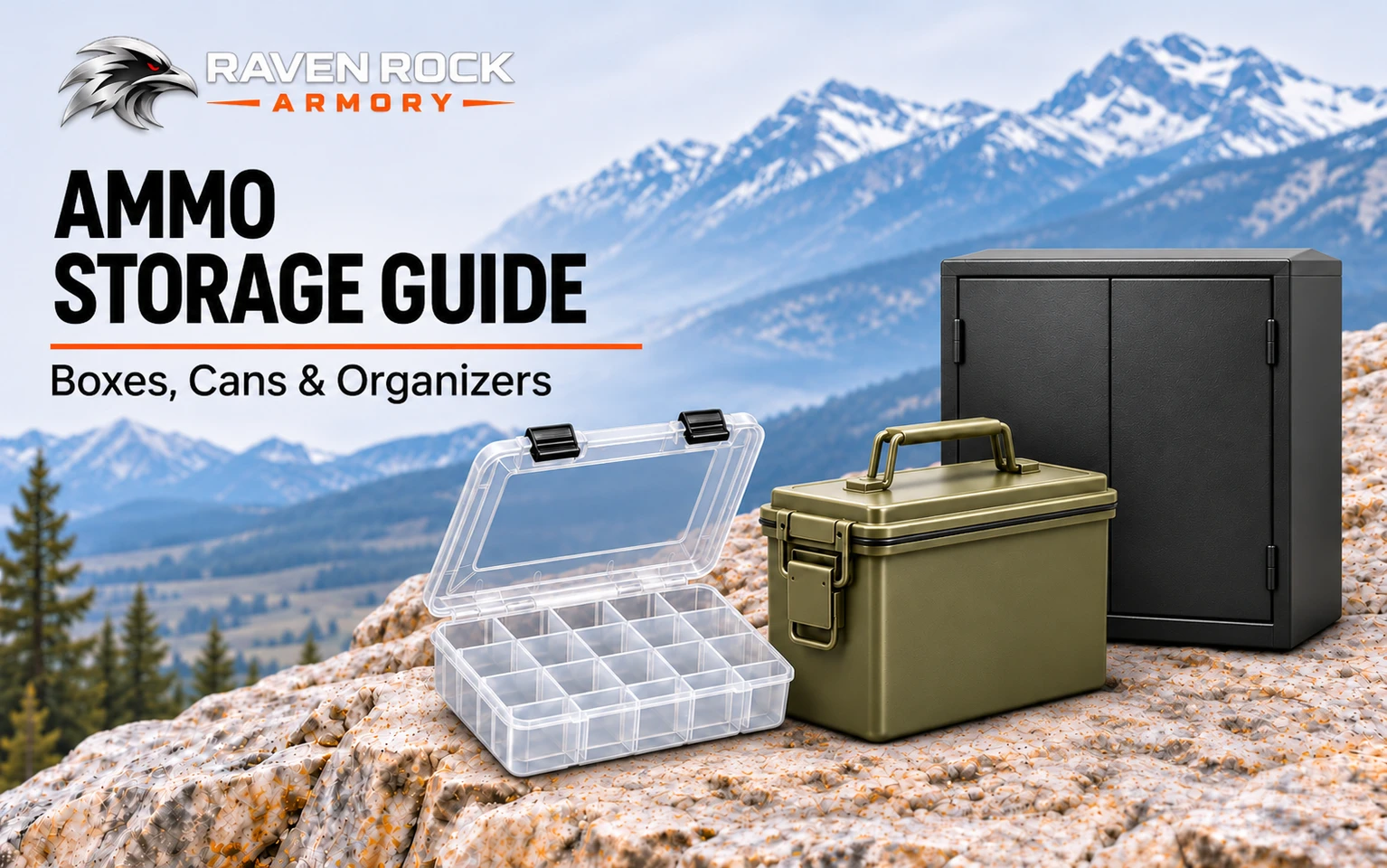

Ammo storage.
A place for every load.
Choose boxes, cans and bags that fit your ammunition and how you use it. Start with compatibility, compare protection and portability, then build a storage routine that keeps everything identifiable.
What does your storage need to do?
A compact cartridge box, a bulk can and a range bag solve different problems. Choose the format first, then compare the exact model’s dimensions and features.
Cartridge boxes
For separating individual cartridges by caliber or load. Molded cells make identification and organization easier.
Before choosing: Check cell diameter, cartridge length and bullet profile.
Browse cartridge storage →Ammo cans & bulk containers
For keeping factory boxes or larger quantities together. Compare steel and polymer designs by construction and usable space.
Before choosing: Check the lid, gasket, latches, handle and loaded weight.
Browse ammo boxes & cans →Ammo bags & carry gear
For organizing supplies that travel to the range or field. Compartments and reinforced carrying points matter.
Before choosing: Check closure strength, interior layout and carrying comfort.
Browse ammo bags →Security containers
For controlling access. Choose the lock, construction and installation method to suit the storage location.
Before choosing: Verify security and fire ratings separately; do not assume either.
Browse secure storage →Six options. Different strengths.
Use this comparison to narrow the category. Model-specific instructions and ratings determine what an individual container can do.
| Storage type | Useful for | What to check | Do not assume |
|---|---|---|---|
| Cartridge boxes | Individual cartridges and separated loads | Cell dimensions, caliber fit, lid clearance | Fits every cartridge with a similar name |
| Metal ammo cans | Rigid bulk organization | Corrosion, latch, gasket and loaded weight | Waterproof, fire-rated or secure by default |
| Polymer ammo cans | Lightweight empty containers | Hinge, handle, wall strength and stacking limits | The same strength or ratings as every metal can |
| Ammo bags | Portable range organization | Zippers, reinforcement, compartments and weight | A substitute for a locking security container |
| Utility cases | Protective gear organization | Interior fit, foam, latches and stated seal rating | Suitable for ammunition unless the maker confirms it |
| Safes & vaults | Restricting unauthorized access | Lock, installation and independent ratings where stated | Fire protection follows automatically from a lock |
Before you fill the first container.
- Confirm compatibility. Check caliber or gauge, cartridge length and cell dimensions. For shotshells, verify gauge and shell length.
- Choose suitable packaging. Keep factory packaging when practical, or use packaging designed for ammunition.
- Allow for loaded weight. Ammunition is dense. Evaluate the handle, latch and manufacturer’s load guidance before filling a large container.
- Review closure and seal details. Inspect the gasket and latch, and use only the protection claims made for that model.
- Plan stable storage. Follow the maker’s stacking limits and keep loaded containers stable and accessible to authorized users.
Label clearly. Inspect regularly.
Separate calibers and loads, and keep the original manufacturer and lot details with the ammunition. A storage container should make identification easier rather than replace the information on the factory box.
- Use clear outside labels. Identify the caliber or gauge and the load stored inside.
- Keep the original details. Retain brand, bullet or shot information and lot identification when repackaging.
- Check the container. Review hinges, latches, handles, walls and gaskets for cracks, corrosion or deformation.
- Reassess the setup. Check fit, total weight and storage conditions when the contents or location change.
Browse storage by purpose.
Explore these related RRA categories, then verify the dimensions, compatibility and ratings of the exact product. Category links do not guarantee individual item availability.
Ammo storage, answered.
Are ammo cans waterproof?
Only rely on a waterproof claim when the exact manufacturer provides it and explains the applicable rating or conditions. A gasketed lid alone does not establish waterproof performance.
Will one cartridge box fit every caliber?
No. Case diameter, overall cartridge length, bullet profile and cell dimensions all affect fit. Check the box manufacturer’s compatibility information for the exact cartridge.
Should I keep the original ammunition packaging?
Yes, when practical. SAAMI recommends original packaging or packaging designed for ammunition. Retain manufacturer and lot information so the contents remain identifiable.
Is an ammo can the same as a safe?
No. A typical can is an organization and transport container. A locking point or latch does not establish forced-entry resistance or fire protection.
How should I choose between metal and polymer?
Compare the actual product’s wall construction, hinges, latches, handles, seal and load guidance. Metal and polymer describe materials, not a universal level of protection.
What should I inspect regularly?
Check container walls, hinges, handles, latches, lids and gaskets. Look for corrosion, cracks, deformation or wear. Follow manufacturer guidance for damaged containers or questionable ammunition.
Organize. Protect. Identify.
Start with the storage format that fits your needs. Need help with a particular product’s compatibility? Contact Raven Rock Armory before choosing.
Explore Popular Articles