The Practical Prepper: A Montana Guide to Outages, Evacuation & Home Safety
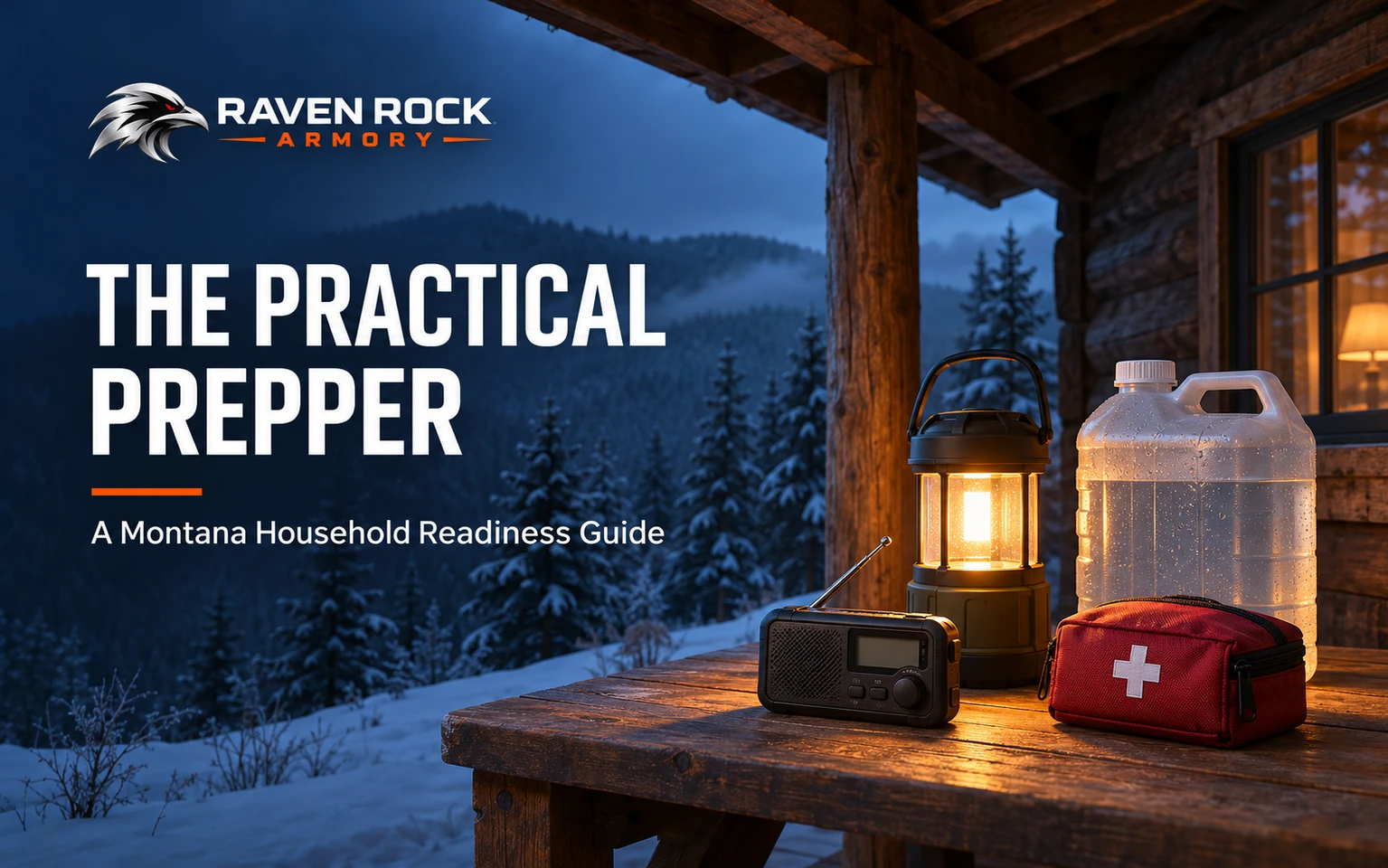
Raven Rock Armory / Montana Household Readiness
Ready to stay.
Ready to leave.
When the lights go out or a wildfire warning comes in, you need to know what you’ll do next. Start with supplies for three days, pick a place you can go, and give everyone in the house a simple way to check in.
01 / What to have ready
Build for the first 72 hours
Set up a home supply shelf and a smaller bag you can grab on the way out. Everyone should know where both are. If you’re starting from scratch, buy a little at a time and stock food your household already eats.
Water and food
The American Red Cross recommends budgeting one gallon of water per person per day. For four people, that’s 12 gallons for three days, plus water for pets. If space and budget allow, build toward a two-week supply of water and shelf-stable food at home. Choose some meals you can eat without heat and keep a manual can opener handy.
First aid and essential medicines
Keep your kit where everyone can point to it in the dark. Include a printed list of medications and allergies. Ask your pharmacist or care team how to prepare for refills or refrigeration during a prolonged outage.
Browse first aid suppliesLight where you’ll need it
Put a headlamp by your bed and a lantern in a shared room. Test both, and keep the right spare batteries alongside them. If you use rechargeable lights, put charging on your regular calendar.
Browse headlamps · Browse lanternsAlerts and a check-in plan
Write down an out-of-area contact and agree who will check in with them. Keep a paper copy with both kits. A battery radio is useful if your internet is down; look for NOAA Weather Radio reception and alert capability if you want weather alerts.
Sign up for Flathead County emergency alerts02 / When the lights go out
Decide whether you can safely stay
A short outage calls for a flashlight. A long winter outage can mean losing heat, water from a well pump, or power for medical equipment. Decide where you could go and how you’d get there before you need to make that call.
- Keep the fridge closed. USDA says an unopened refrigerator keeps food cold for about four hours. If the outage continues, use USDA’s power failure guidance to decide what to keep and what to discard.
- Keep fuel-burning equipment outside. Follow the CDC’s outage guidance: run portable generators outdoors, at least 20 feet from doors, windows and vents. Never use an outdoor grill or a gas oven to heat your home.
- Make a backup plan for medical needs. If someone relies on powered equipment, ask their care team and equipment supplier about backup power and where to go if it runs out. Don’t wait for the battery to get low before acting on that plan.
03 / When a warning comes in
Know what leaves with you
Pack the essentials you’d miss on the first night away: medications, water, layers, a light, a charger, copies of key documents and supplies for pets. Keep shoes, keys and carriers easy to reach. Pick two routes and a place to meet if people are coming from different locations. Follow official route instructions during an evacuation.
In Flathead County, an evacuation warning means get ready to leave and consider going early if you’ll need extra time. An evacuation order means leave immediately. Follow Flathead County emergency announcements, or your own county’s instructions if you live elsewhere.
04 / Protect the people at home
Make your home easier to get out of and safer to come back to
- Check alarms and exits. Test your smoke and carbon monoxide alarms, clear exit paths, and show everyone two ways out of each room where possible. Choose an outdoor meeting spot and practice your home fire escape plan.
- Check doors and outdoor lighting. Fix exterior locks or latches that don’t close reliably, replace failed entry lights, and make sure everyone who lives there can get out without fumbling for a key.
- Trade numbers with a neighbor. Agree to check in after a storm or outage when it’s safe to do so. Talk in advance about who might need help getting an alert or arranging a ride.
05 / Try it this weekend
Run a 20-minute household drill
Leave the lights off. Find your headlamp, then see if everyone can locate the first aid kit, grab the go bag and name the meeting spot. Count the water you have on hand. Write down the first thing that slowed you down and fix that one thing this week.
Explore Popular Articles